- By Admin
- Floor
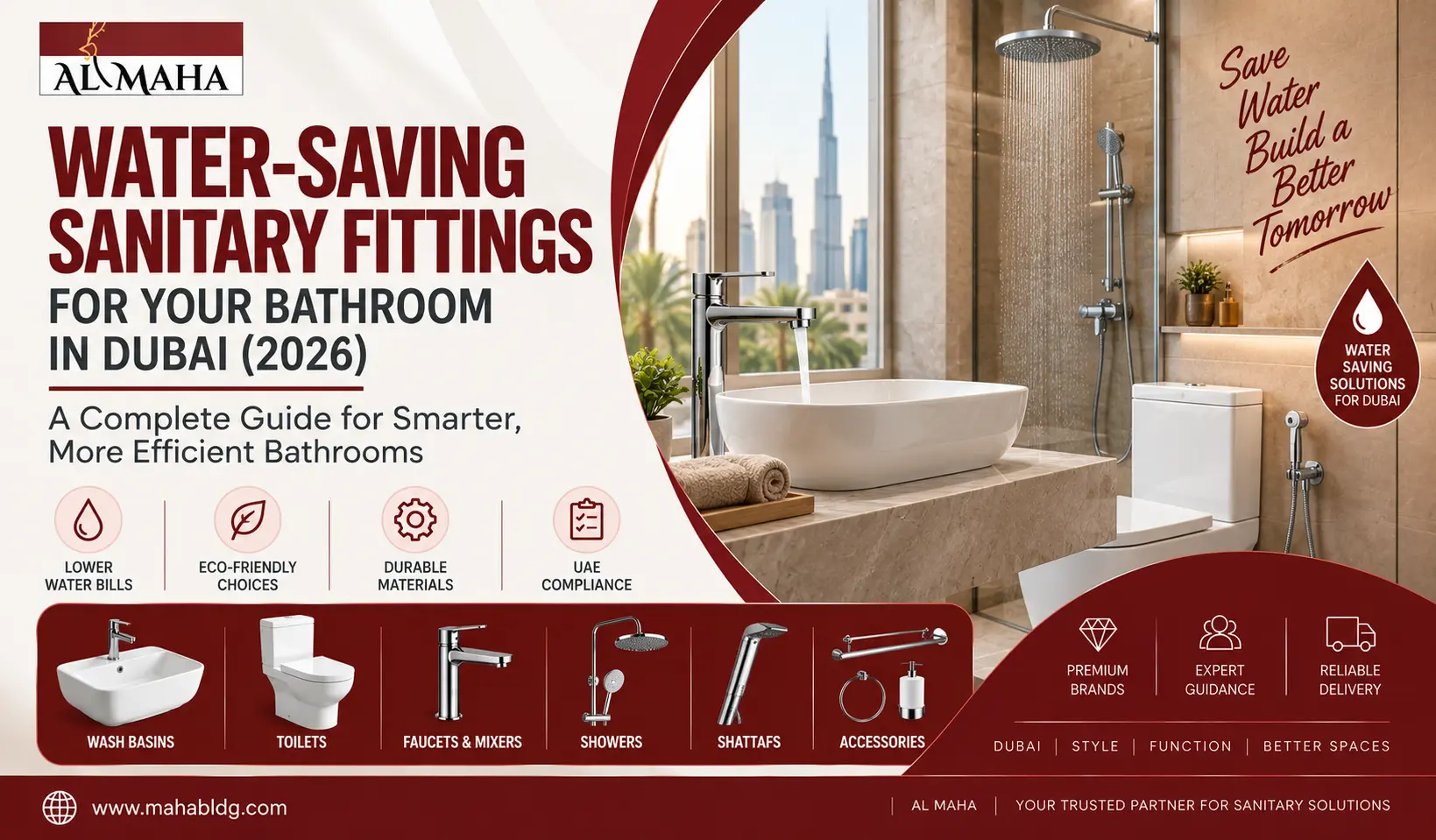
How to Choose Water-Saving Sanitary Fittings for Your Bathroom in Dubai (2026)
Dubai bathrooms face a problem most renovation guides never mention. It's not style. It's not layout. It's water chemistry.
Every drop coming out of your tap has been desalinated, meaning it behaves differently from the groundwater most global buying guides assume you're dealing with. That single fact changes which sanitary fittings actually make sense for your home, your DEWA bill, and your building's compliance sheet.
This guide skips the generic "brushed gold looks great" advice you've already read ten times. Instead, it covers the numbers, the regulations, and the material science that actually determine whether your bathroom upgrade saves you money or quietly wastes it.
Understanding Dubai's Water-Saving Standards for Sanitary Wares and Fittings
Before you buy a single tap, know what Dubai actually requires.
The Dubai Green Building Code, known locally as Al Sa'fat, sets minimum efficiency benchmarks for new developments and major renovations. Landlords and developers need compliant sanitary wares and fittings to pass inspection — this isn't optional paperwork, it's enforced at handover.
Key things to check before purchase:
Al Sa'fat rating tier — Silver, Gold, or Platinum buildings have different minimum flow requirements
DEWA Green Stamp certification — confirms a fitting meets Dubai's water-efficiency baseline
WaterSense or CE labeling — international benchmarks accepted alongside local standards
Skipping this step is the most common mistake in villa renovations. Homeowners buy attractive sanitary items from a showroom, install them, then fail their building management's compliance check months later.
Why Desalinated Water Changes Everything for Sanitary Fittings in Dubai
Dubai's tap water comes from desalination plants, then travels through kilometers of piping before it reaches your home. Along the way, it picks up mineral content that behaves very differently from the "hard water" discussed in most Western plumbing guides.
The practical effect: micro-aerators and auto-shutoff valves clog faster in Dubai than almost anywhere else. A cheap plastic aerator rated for European water conditions can lose 30% of its flow efficiency within a year here.
This is why material selection matters more in Dubai than in most markets.
Stainless Steel Sanitary Fittings vs. Everything Else
Stainless steel sanitary fittings — specifically SS304 grade — resist limescale buildup far better than chrome-plated brass alternatives. For high-touch fixtures like basin mixers and shower valves, SS304 is worth the premium.
DZR brass (dezincification-resistant brass) is the second-best option, and it's what most licensed Dubai plumbers still recommend for internal pipework because it balances cost with corrosion resistance.
Aluminum sanitary fittings sit at the budget end. They're lightweight and cheap, but aluminum reacts poorly to Dubai's mineral-heavy water over time — expect visible pitting within two to three years on exposed fittings. Reserve aluminum for non-water-contact hardware like towel rails, not for anything carrying water.
Plastic sanitary fittings, meanwhile, have a specific and legitimate use case: concealed sanitary pipe fittings and sanitary tube fittings inside walls, where UV exposure and visible wear aren't concerns. PPR (polypropylene random copolymer) piping handles Dubai's water chemistry well and is now standard in most new builds across Dubai and Sharjah.
Quick material guide:
Fitting Type | Best Material in Dubai | Why |
Visible taps/mixers | SS304 stainless steel | Resists scale, holds finish |
Internal pipework | DZR brass or PPR plastic | Cost-effective, corrosion-resistant |
Shower valves | SS304 or DZR brass | High water contact, needs durability |
Towel rails, trims | Aluminum acceptable | Low water exposure |
Browse the full sanitary ware category to compare stainless steel, brass, and PPR options before you shop in person.
Sanitary Pipe Fittings and Sanitary Tube Fittings: What Actually Goes Wrong
Most bathroom renovation failures in Dubai don't happen at the visible fixture — they happen behind the wall.
Cheap sanitary tube fittings with poor threading tolerances develop micro-leaks under Dubai's water pressure variations, especially in high-rise buildings where pressure fluctuates between floors. By the time a leak shows through drywall, you're often looking at a full re-tiling job, not a simple fix.
When sourcing sanitary pipe fittings, ask your supplier for:
Pressure rating certification (should handle at least 10 bar for residential use)
Compatibility confirmation with your building's existing pipe material
A warranty that specifically covers Dubai climate conditions, not a generic international warranty
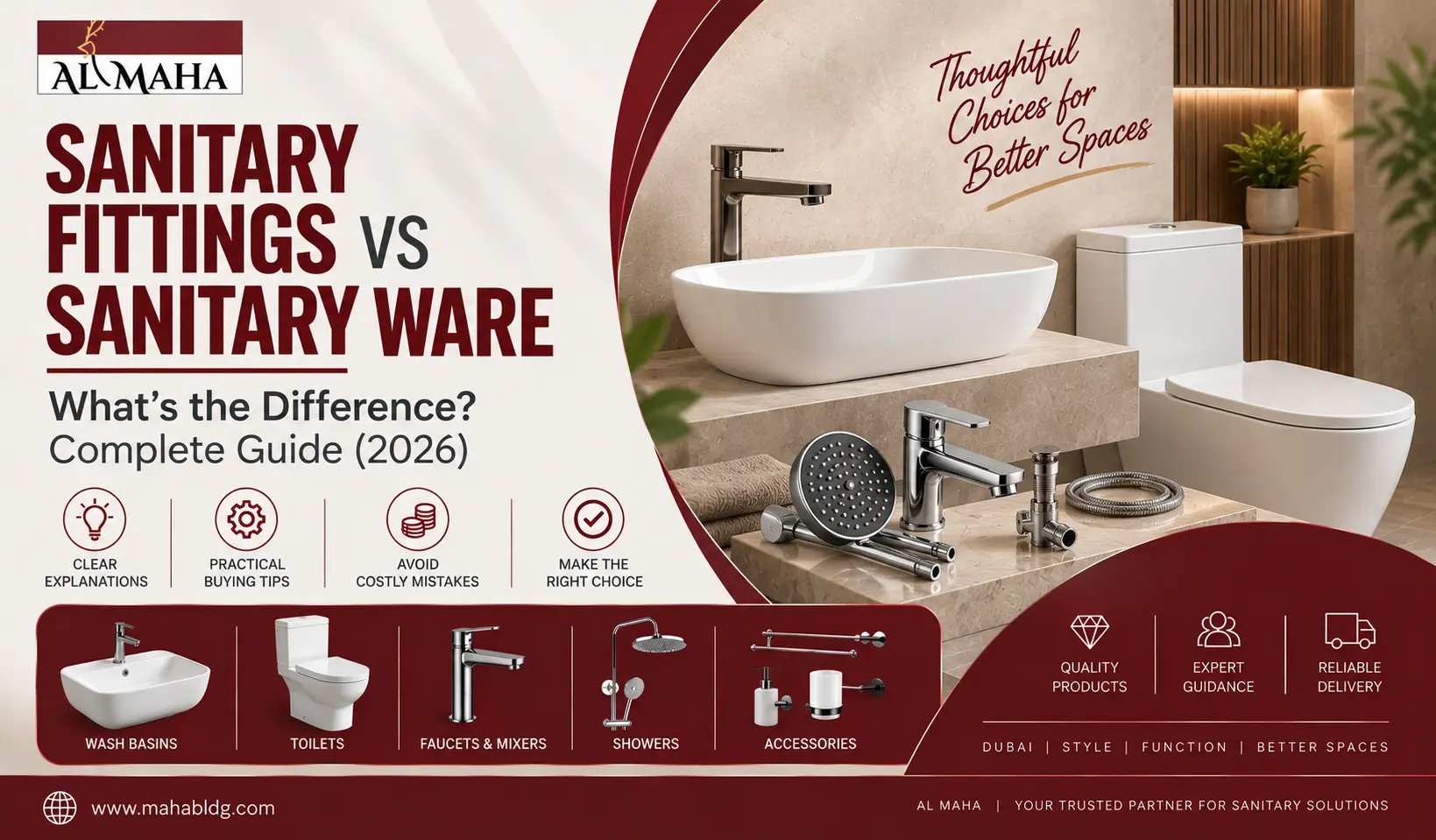
For a deeper breakdown of how pipe fittings differ from finished sanitary ware, see our guide on sanitary fittings vs. sanitary ware.
If your supplier can't answer these three questions, keep looking.
Hygienic Fittings Stainless Steel: Why It Matters Beyond Aesthetics
"Hygienic" isn't just a marketing word. Hygienic fittings stainless steel designs use smooth, seamless surfaces specifically engineered to prevent bacterial buildup in joints and crevices — a real concern in Dubai's warm, humid bathroom environments where mold and bacteria thrive faster than in temperate climates.
Look for:
Seamless weld joints (no visible seams where grime collects)
Non-porous surface finishes
Easy-clean profiles on basin mixers and shower fittings
This matters most in family bathrooms and rental properties, where cleaning frequency is lower than owners assume.
Key Fittings Breakdown & Target Flow Rates
Here's where most guides get vague. Actual numbers, by fixture:
Sink Mixers
Look for aerators rated at 3.8 to 5.0 litres per minute (L/min). Standard uncontrolled mixers run at 9-12 L/min — nearly triple the water use for the same handwashing task. Laminar flow devices are a solid alternative if you dislike the aerated "spray" feel.
Eco-Showers
Target 7.5 L/min or lower. Air-injected rainfall heads achieve this by mixing air into the water stream, maintaining pressure sensation while cutting actual flow. Basic flow restrictors work too, but tend to feel weaker under Dubai's variable building pressure.
Toilets
Dual-flush systems (4.5L full flush / 3L reduced flush) remain the standard recommendation. Vacuum-assist systems use even less water per flush but cost significantly more upfront and require specific plumbing configurations — usually only worth it in new-build villas, not retrofits.
Shattafs — The Fixture Everyone Forgets
This is the biggest content gap in existing Dubai bathroom guides, and it's costing homeowners real money.
Standard shattaf hand sprayers, standard in nearly every Gulf bathroom, are almost never flow-rated by manufacturers. Unlike showers and sink mixers, they're treated as an afterthought — yet they're used multiple times daily by every household member.
An unrated shattaf can push through 8-10 L/min at typical building pressure. A flow-limited version with a built-in pressure regulator drops that to 4-6 L/min without noticeably weakening the spray. Given how frequently shattafs are used compared to sink taps, this single swap often delivers more water savings than upgrading every other fixture in the bathroom combined.
When shopping for sanitary hose fittings for a shattaf installation, specifically request:
A flow-limiting valve built into the hose connector, not just the sprayer head
Braided stainless steel hose (resists kinking and cracking under UV exposure near windows)
A pressure regulator rated for your building's supply pressure
For a full walkthrough on selecting flow-rated fixtures, check our guide on how to choose sanitary fittings in Dubai.
The Real Dirham Math: What You Actually Save
Numbers, not vague promises.
Take a typical 3-bedroom villa with three bathrooms, switching from unrated 9 L/min aerators and shattafs to 4 L/min equivalents across all fixtures.
Rough estimate:
Average household water use per fixture, per day: ~15 minutes combined across all taps/shattafs
Daily savings per fixture at 5 L/min reduction: ~75 litres
Across roughly 8 fixtures (sinks, showers, shattafs) in a 3-bedroom villa: ~600 litres/day saved
Monthly savings: roughly 18,000 litres
At current DEWA consumption tier rates, that translates to a noticeable reduction on the water portion of your monthly bill — often enough to offset the cost of the upgraded fittings within 18 to 24 months, depending on tier and household size. Larger households with higher baseline consumption see faster payback, since DEWA's tiered pricing structure charges progressively more per litre as usage climbs.
The takeaway: this isn't a "feel good" upgrade. It's a calculable return.
Buyer's Checklist & Where to Source in Dubai
Before you buy, walk through this list:
Documentation to request:
Flow rate specification sheet (in L/min, not just "water-saving" marketing copy)
DEWA Green Stamp or WaterSense certification
Material grade confirmation (SS304, DZR brass, or PPR — get it in writing)
Pressure rating for pipe fittings (minimum 10 bar residential)
Warranty terms specific to UAE climate conditions
Where to shop:
Dubai's Al Quoz industrial area and Sheikh Zayed Road showroom strip remain the two strongest hubs for verified sanitary ware suppliers, with a mix of trade counters and retail showrooms where you can physically inspect finish quality and ask suppliers to demonstrate flow rates on display units.
Verification tip: Ask any showroom to show you the flow rate testing certificate for the specific model you're buying — not a generic brand certificate. Batch-to-batch quality can vary, especially with imported plastic sanitary fittings and lower-cost stainless steel lines.
Explore the complete sanitary ware collection for certified, in-stock fittings across all material grades.
Frequently Asked Questions
What flow rate counts as "water-saving" for sanitary fittings in Dubai?
Sink mixers should stay under 5.0 L/min, showers under 7.5 L/min, and shattafs under 6 L/min. Anything higher isn't meaningfully water-efficient, regardless of marketing claims.
Are stainless steel sanitary fittings worth the extra cost in Dubai?
Yes, for visible and high-contact fixtures. SS304 stainless steel resists Dubai's desalinated water mineral content far better than standard chrome-plated brass, extending fixture lifespan by several years.
Do plastic sanitary fittings work well in Dubai's climate?
Only for concealed pipework, not visible fixtures. PPR plastic pipe fittings handle internal water lines well but degrade quickly under direct sun or UV exposure.
What is Al Sa'fat and does it affect my sanitary fittings choice?
Al Sa'fat is Dubai's Green Building Code. It sets minimum water efficiency ratings for fittings in new developments and major renovations — checking compliance before buying avoids failed inspections later.
Why do shattafs waste more water than people realize?
Most shattafs are sold without flow ratings, unlike showers and taps. Unregulated units can use 8-10 L/min, and because they're used multiple times daily, they often account for more household water use than any single other fixture.
How long do aluminum sanitary fittings last in Dubai?
Aluminum is not recommended for water-contact fittings here. It pits and corrodes within two to three years due to Dubai's mineral-rich desalinated water. Use it only for non-water hardware like towel rails.
Where can I find certified sanitary hose fittings and hygienic fittings stainless steel options in Dubai?
Al Quoz and Sheikh Zayed Road host the city's main verified showrooms. Always request flow rate certificates and material grade documentation for the specific model, not just the brand.
 21 Sep, 2026