- By Admin
- Floor
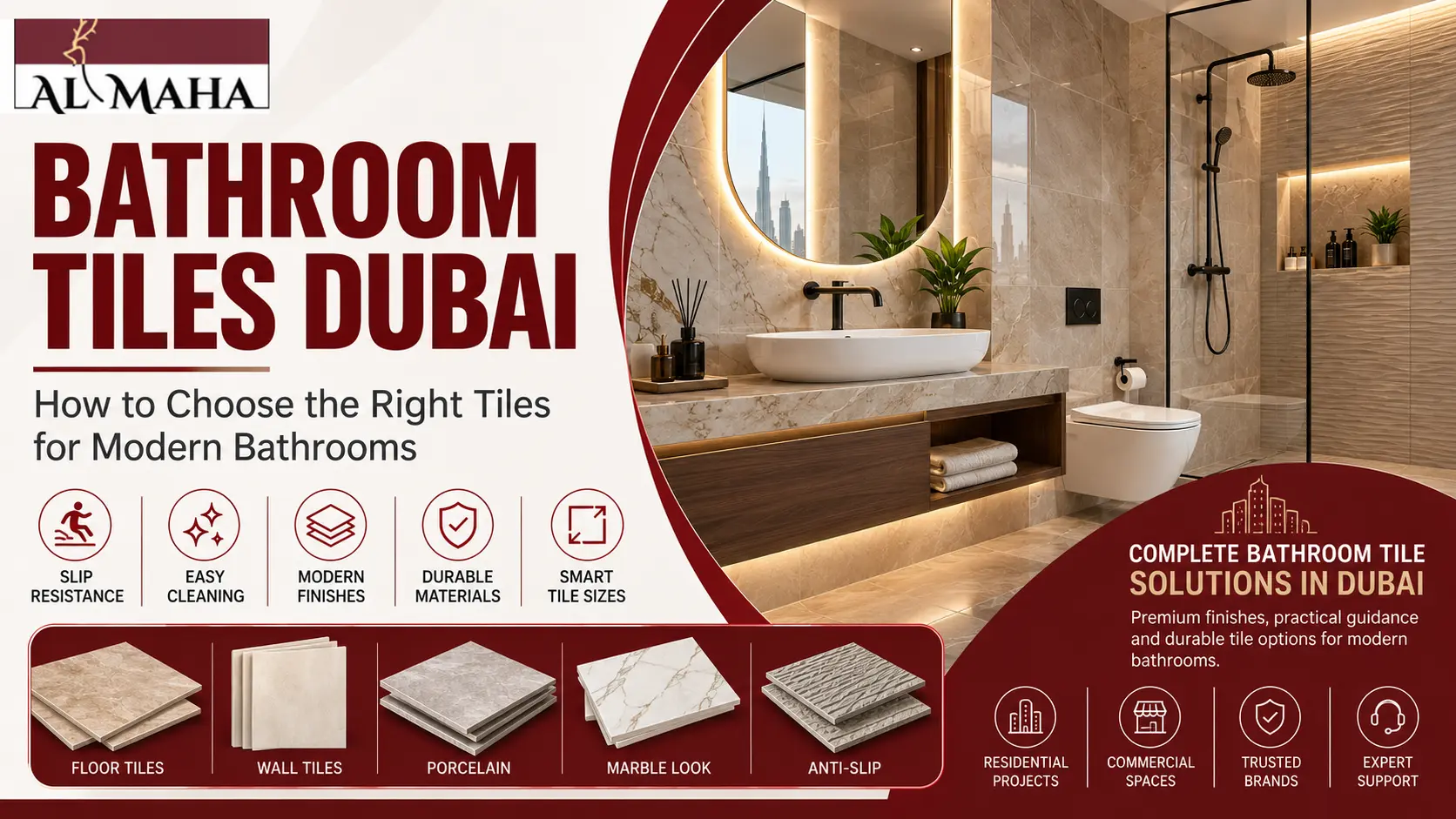
Bathroom Tiles Dubai: How to Choose the Right Tiles for Modern Bathrooms
A bathroom in Dubai works harder than one in most cities. Hard water, steam, constant air conditioning and daily scrubbing all test your tiles. Pick well and the room looks sharp for 15 years. Pick badly and you get white water spots, slippery floors and grout that turns grey within a year.
This guide walks you through the choices that matter: material, grip, finish, size, waterproofing and budget. It covers bathroom floor tiles, bathroom wall tiles and everything in between, so you can shop with a clear brief.
Start With the Dubai Problem: Water, Humidity and Heat
Three local factors should shape every tile decision.
Hard water. Desalinated tap water leaves limescale. Dark, high-gloss tiles show every spot and streak.
Humidity. Steam from showers meets cold, air-conditioned walls. Moisture lingers, and mould follows wherever it can get in.
Heat and movement. Villas and towers expand and contract with temperature swings. Rigid, badly bonded tile cracks.
Keep these three in mind. Most of the advice below is a response to one of them.
Porcelain, Ceramic or Stone?
The material decides how your tile handles water, wear and cleaning.
Porcelain
Porcelain is dense and fired at high temperature. It absorbs very little water, resists stains and holds up under heavy use. For most Dubai bathrooms it is the safest choice for both floors and walls. Browse Al Maha's porcelain range to see the formats and looks available.
If you want the technical comparison, read our guide to porcelain vs ceramic tiles in Dubai.
Ceramic
Ceramic is lighter and easier to cut, and it usually costs less. It suits washroom wall tiles and low-traffic powder rooms. On a main bathroom floor, porcelain is the better pick.
Natural stone
Marble, travertine and granite look luxurious, but they are porous. They need sealing and gentler cleaners. More on that in the marble section below.
Bathroom Floor Tiles in Dubai: Grip Comes First
A wet tile floor is a fall risk. Treat grip as a safety spec, not a style choice.
Look for a slip rating. R10 is a sensible minimum for a bathroom floor. R11 suits wet rooms and walk-in showers.
Check the barefoot rating if listed. Wet barefoot areas are often rated A, B or C. Ask the supplier which class the tile carries.
Match texture to the zone. Use a fine textured tile in the shower and a smoother one across the dry part of the room.
Think about cleaning. Deep texture grips well but holds soap scum. A soft-matt surface balances both.
For washroom floor tiles in guest or commercial toilets, go for the same logic. Wet shoes and mopped floors make grip just as important there.
Bathroom Wall Tiles and Washroom Wall Tiles in Dubai
Walls give you more freedom. They don't carry foot traffic, so you can choose on look and ease of cleaning.
Go large where you can. Fewer grout lines mean less to scrub.
Use a feature wall. One textured or patterned wall behind the vanity or bath gives the room a focal point.
Keep it to a few patterns. A simple rule: one hero tile, plus two supporting tiles at most. More than that looks busy in a small room.
Take tiles to full height in wet zones. Stopping halfway up a shower wall invites splashes onto bare paint.
Washroom walls in commercial spaces take more abuse. Choose glazed porcelain or a durable ceramic that wipes clean fast.
The Best Tile for Shower Walls
Shower walls take direct spray, steam and soap every day. Here is what to look for.
Low water absorption. This is why porcelain shower tile is the standard answer.
A surface that cleans easily. Soft-matt or lightly textured finishes hide limescale better than gloss.
Large formats with thin joints. They cut down on grout, the weakest point in any shower.
Proper waterproofing behind. The tile is only the visible layer. The membrane behind it does the real work.
Small mosaics can work on a shower floor because the many joints help with grip and drainage. On the walls, bigger tiles are easier to keep clean.
Marble Bathroom Tiles in UAE
Nothing beats the look of marble bathroom tiles. They also ask more of you.
They are porous. Seal them on installation and reseal on a schedule.
They react to acids. Descalers and vinegar-based cleaners can etch the surface, so use pH-neutral products.
No two slabs match. Dry-lay everything and mix tiles from several boxes for a natural spread of veining.
White marble bathroom tiles give a bright, calm, hotel-like feel, but they show limescale and water marks more than a veined or mid-tone stone does. If you love the look but not the upkeep, consider a marble-look porcelain. You get the veining with far less maintenance.
If you are weighing stone options, our guide to marble vs granite in Dubai covers the differences, and the marble and granite collection shows what is on offer.
Terrazzo Tiles for the Bathroom in UAE
Terrazzo tiles for the bathroom bring colour and character without the fragility of natural stone. The speckled chips hide spots and scuffs well, which makes them a smart match for hard water.
A few tips:
Choose a honed or matt surface for floors. Polished terrazzo gets slippery when wet.
Pair a bold terrazzo floor with plain walls so the room doesn't feel crowded.
Check the slip rating, as you would with any floor tile.
Terrazzo-look porcelain is also widely available and is easier to maintain than the real thing.
Finish and Colour: What Hides Limescale
This is where most tile guides miss the point for Dubai.
Finish | Looks like | Hard water verdict |
High gloss, dark | Dramatic, mirror-like | Shows every spot. High effort. |
High gloss, white | Clean and bright | Shows streaks. Medium effort. |
Soft matt, mid-tone | Calm, modern | Hides deposits well. Low effort. |
Textured or stone-effect | Natural, tactile | Hides marks, but needs a brush now and then. |
Mid-tone greys, warm beiges and stone-effect surfaces give you the best balance. If you want a white bathroom, pair a soft-matt white with a squeegee habit. Our tile finish guide goes deeper on each surface type.
Size and Layout
Large-format tiles suit modern bathrooms. They make a small room feel bigger and reduce grout lines.
There are trade-offs:
Floors must be flat. Large tiles show every dip in the screed. Prepare the substrate properly, as we explain in how to prepare a floor before installing porcelain tiles.
Slopes need planning. A large tile on a sloping shower floor can lift at the edges. A linear drain lets you slope in one direction, which suits big formats.
Handling is harder. Slabs need two installers and the right tools.
Read more in our guides to large-format porcelain tiles in Dubai and porcelain tile sizes.
Waterproofing: What Goes Behind the Tile
This is the part nobody sees and the part that causes most failures.
In a Dubai bathroom, steam meets cool, air-conditioned walls. Moisture can build up behind the tile, and mould starts where it stays damp. A good tile does not fix a poor waterproofing job.
A sound sequence looks like this:
Prepare the substrate. It should be clean, flat and cured.
Apply a waterproofing membrane. Cover the full shower area, the floor and the lower wall.
Reinforce the corners and joints. Use reinforcing tape at wall-to-floor junctions and around pipes and drains.
Flood test. Fill the area with water and leave it for 24 to 48 hours before tiling.
Fix the tile with the right adhesive. Use a polymer-modified adhesive suited to porcelain and wet areas.
Fill the joints with the right grout. More on that below.
Adhesive choice matters as much as the tile. See our porcelain tile adhesive guide, or browse interior tile glue. For installation steps, read our porcelain tile installation guide for Dubai.
Grout: Epoxy or Cement?
Grout is the weak link in any wet area.
Cement grout is cheaper and easy to work with. It is porous, so it stains and can grow mould if it isn't sealed.
Epoxy grout is non-porous and stain resistant. It costs more and is less forgiving to install, but it stays cleaner in showers.
For shower walls and floors, epoxy is worth the extra money. For dry wall areas, cement grout is fine. Our porcelain tile grout guide compares the two in more detail.
Heated Floors and Cracking
Underfloor heating is less common in Dubai, but it shows up in some luxury villas. If you plan it:
Choose porcelain. It conducts heat well and handles temperature change better than most stone.
Use a flexible adhesive rated for heated floors.
Allow movement joints, and follow the heating supplier's curing and warm-up schedule.
Cracks also come from poor bonding, hollow spots and an uneven base. Our guide on how to prevent cracked porcelain tiles lists the common causes.
Microcement and Tadelakt: Seamless Alternatives
If grout lines annoy you, there are other routes.
Microcement gives a continuous, modern surface with no joints. It needs a skilled applicator, proper sealing and regular maintenance.
Tadelakt is a polished lime plaster with a soft, handmade look. It is beautiful and also demanding to apply and care for.
Both cost more in labour and need careful sealing. A common compromise is tile on the floor and shower, and a seamless finish on the dry walls.
How Much Tile to Order
Always order more than your measured area.
Add 10 to 15% for standard straight layouts.
Add 15 to 20% for diagonal, herringbone or heavily cut layouts.
Buy everything in one go. Colour and shade can vary between batches.
Keep a few spare boxes. You will want them if a tile cracks years later.
Shopping for Bathroom Tiles: Sales and Real Value
A bathroom tiles sale can save you money, but only if you check a few things first.
Confirm the batch and shade are consistent across all the boxes you need.
Ask for the slip rating and water absorption details.
Check whether the tile size and thickness suit your layout.
Compare the total cost, including adhesive, grout, waterproofing and labour. The cheapest tile is not always the cheapest bathroom.
A good supplier will answer these questions easily. Our guides on how to choose the best tile supplier in Dubai and the Dubai tile buying guide will help you ask the right questions.
Don't Forget the Fixtures
Tiles set the backdrop, but sanitary ware and fittings complete the room. Choose them together so finishes and proportions work. Browse the sanitary ware collection, read about quality bathroom fixtures in Dubai, or get ideas from luxury bathroom design ideas with premium sanitary ware.
Quick Checklist Before You Buy
Porcelain for floors and shower walls
R10 or higher for floors, R11 for wet rooms
Soft-matt or mid-tone finish to hide limescale
Large format where the substrate allows
Waterproofing membrane, reinforced corners and a flood test
Epoxy grout in wet zones
10 to 20% extra tile, from one batch
Ready to Choose?
The right bathroom tile is the one that suits your water, your climate and the way you live. Start with the material, check the grip, pick a finish that forgives hard water, and spend properly on what goes behind the wall.
Explore the full tile and building materials range, or contact Al Maha team with your plans and get advice before you order.
 16 Oct, 2026