- By Admin
- Floor
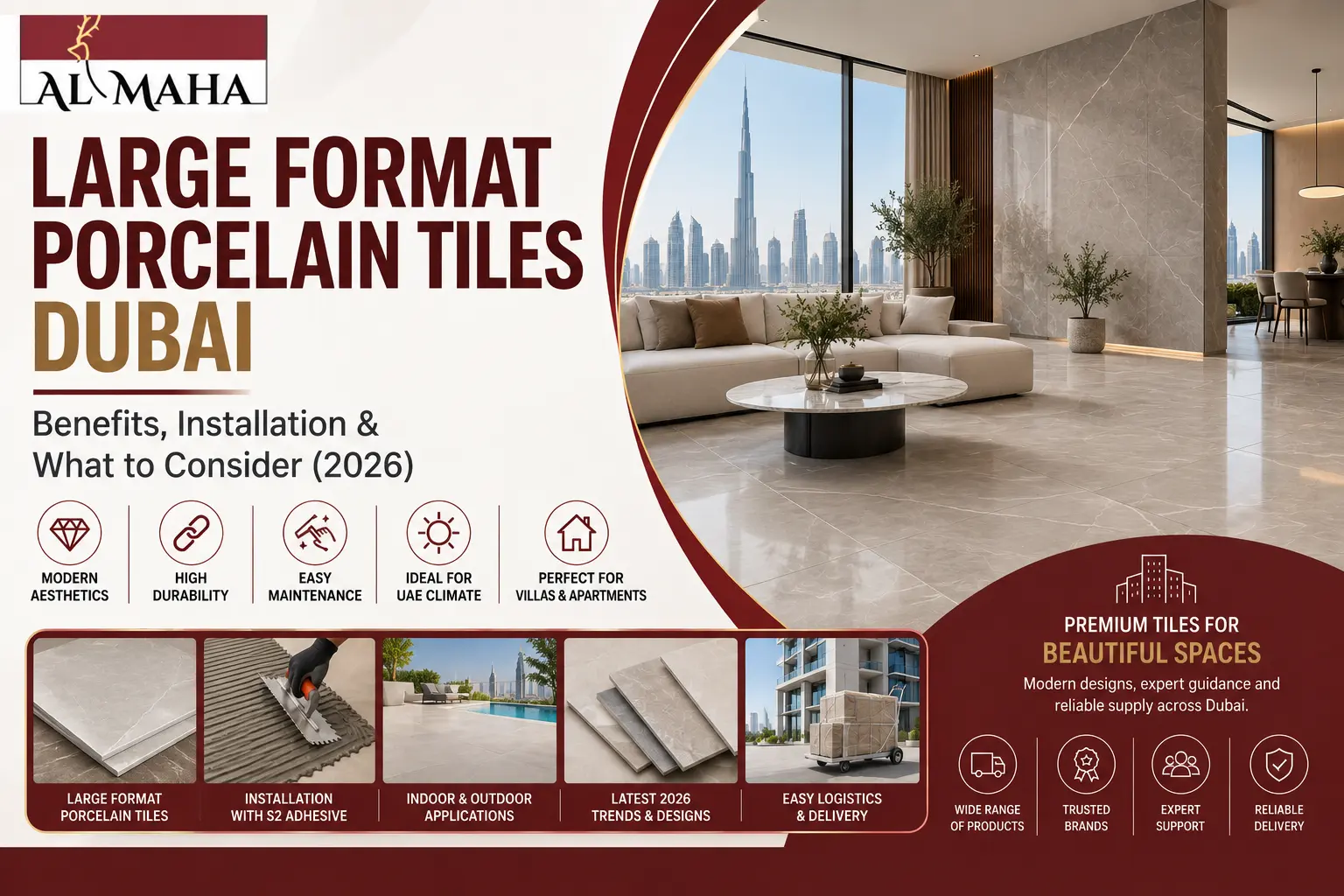
Large Format Porcelain Tiles Dubai: Benefits, Installation & What to Consider (2026)
Walk into any newly renovated villa in Arabian Ranches or a fresh handover apartment in Downtown Dubai this year, and you'll notice the same thing on the floor: fewer lines, more slab. Large format porcelain tiles have become the default choice for homeowners and developers across the city, and the trend shows no sign of slowing in 2026.
But scaling up tile size isn't just a design decision — it changes the adhesive you need, the crew you hire, and even how the tiles get into your building in the first place. This guide walks through the real benefits, the Dubai-specific technical rules competitors gloss over, and what it actually costs to do this properly.
Why Dubai Homeowners Are Switching to Large Format Porcelain in 2026
The shift toward large format porcelain tiles in Dubai isn't just a passing aesthetic trend — it's a response to how people actually want their homes to feel.
Fewer grout lines mean less visual clutter. A living room floored in 120x240cm slabs reads as one continuous surface rather than a grid of small tiles.
Seamless indoor-outdoor transitions are easier to achieve when the same large format porcelain runs from your majlis straight onto the terrace, an approach covered in more depth in our outdoor tiles in Dubai guide.
Optical room expansion. Large slabs trick the eye into perceiving more square footage — a genuine advantage in Dubai apartments where floor space is at a premium.
If you're sourcing materials, working with an established premium tile supplier Dubai buyers trust makes this transition considerably smoother, since slab availability, batch consistency, and technical adhesive guidance vary enormously between suppliers. Our guide on how to choose the best tile supplier in Dubai breaks down exactly what to check before committing to one, and our tile buying guide for Dubai covers the broader decision process from budget to finish.
Key Benefits: Aesthetics, Hygiene, and Long-Term Value
Minimal Grout, Maximum Impact
Grout lines aren't just visual noise — they're maintenance liability. Every grout joint is a potential trap for dirt, moisture, and mold, especially in Dubai's humidity spikes during summer. Large format porcelain tiles dramatically reduce the number of joints per square meter, which means:
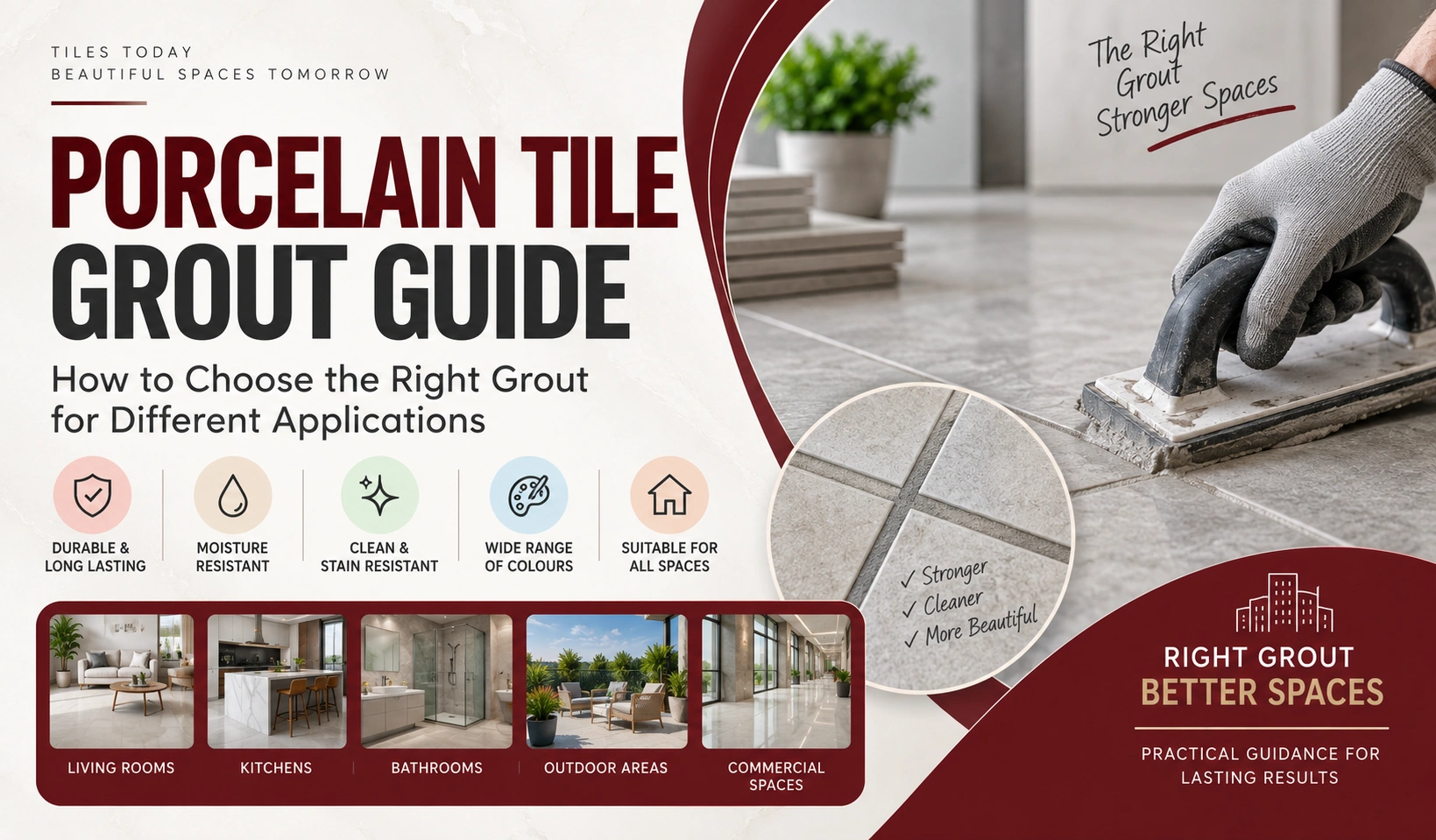
Less grout to clean or reseal over time — see our porcelain tile grout guide for how to choose and maintain the right grout for large format work.
Fewer points of water ingress in wet areas like bathrooms and pool decks.
A cleaner, more hygienic surface overall — a genuine selling point for buyers researching porcelain tiles in Dubai for kitchens and bathrooms specifically.
If you're still weighing porcelain against ceramic, our breakdown of porcelain tiles vs. ceramic tiles in Dubai covers where each performs better, and our roundup of the best porcelain tiles available in the market is a useful starting point if you haven't settled on a range yet.
Durability That Outperforms Natural Stone
Porcelain has quietly overtaken marble and timber-look flooring for a simple reason: it performs better under real-world conditions.
Higher resistance to staining, scratching, and moisture absorption than natural marble.
Doesn't require the periodic sealing that marble and granite floors demand.
Holds color and finish consistency far longer under UV exposure than many natural stone alternatives.
For anyone comparing marble suppliers in Dubai or granite suppliers in Dubai against porcelain options, the maintenance gap over a 10-year ownership period is usually the deciding factor.
2026 Dubai Design & Color Trends
This year's design direction has moved away from the stark white marble-look slabs that dominated the last decade.
Warm neutral tones — beige, sand, and greige — are replacing cool grays as the dominant palette in villa renovations.
Japandi-influenced interiors are driving demand for matte, tactile finishes over high-gloss surfaces. Our tile finish guide breaks down matte, polished, and textured options in more detail.
3D textured porcelain that mimics natural stone grain (without the maintenance headache) is showing up heavily in feature walls and slab backsplashes.
Matte anti-slip finishes are increasingly specified for both indoor wet areas and outdoor entertaining zones.
If your project includes a pool or outdoor deck, this trend intersects directly with safety requirements — which brings us to a category worth its own section.
Swimming Pool Tiles: A Dubai-Specific Consideration
Pool areas in the UAE face a distinct combination of constant water exposure, direct sun, and bare feet — which makes tile selection here different from anywhere else in the home.
Swimming pool tiles in Dubai need to handle chlorinated or saltwater exposure without fading or degrading.
Anti slip pool tiles in Dubai aren't optional around wet decking — they're a basic safety requirement, particularly for villas with young children or shared residential pool areas.
Coping tiles in Dubai — the tiles that cap the pool edge — need a rounded, slip-resistant profile distinct from standard flat porcelain, since this is the area most exposed to constant foot traffic straight out of the water.
Working with a dedicated swimming pool tiles company in Dubai rather than a general flooring supplier tends to get better results here, since pool-specific porcelain ranges are engineered differently from standard indoor floor tiles — denser bodies, textured surfaces, and UV-stable glazes matter more around a pool than anywhere else in the home.
If you're comparing pool tiles Dubai suppliers, ask specifically about slip rating (R-values or equivalent), not just the finish's appearance — a tile that looks matte doesn't automatically mean it's rated anti-slip for wet barefoot traffic. For exterior areas beyond the pool deck itself, our outdoor porcelain tiles Dubai guide covers the wider range of specifications to look for.
Dubai Climate & Technical Rules Competitors Skip
This is where most large format tile guides fall short. They'll tell you tiles are "durable outdoors" without explaining what Dubai's climate actually does to a slab.
Thermal Expansion Is Real, and It's Aggressive
Large porcelain slabs on an exposed villa patio or balcony in Dubai face summer surface temperatures well above 45°C. Porcelain expands and contracts with that heat cycle, and on large format pieces, that movement is amplified compared to standard 60x60cm tiles.
Without proper allowance for movement, slabs can tent — buckling upward at the joints — or crack outright under thermal stress.
This is not a rare failure mode in Dubai. It's one of the most common callback issues installers see on outdoor large format installations.
The Fix: S2 Class Flexible Adhesives and Expansion Joints
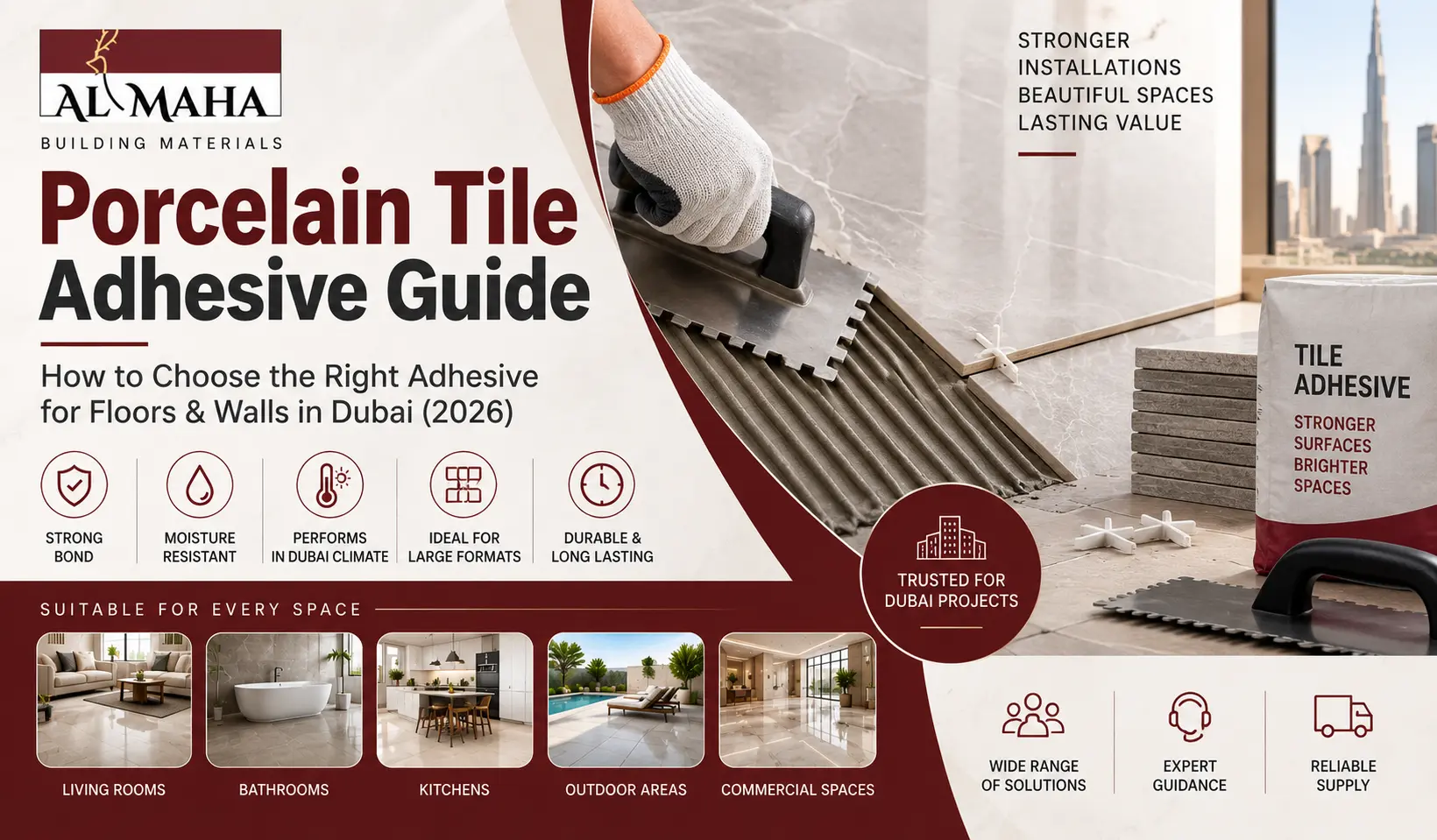
Flexible adhesives rated S2 class are designed specifically to accommodate the movement large slabs undergo under heat cycling. Standard C2 adhesives, common on smaller indoor tile jobs, don't offer enough flex for this application. Our porcelain tile adhesive guide for Dubai explains the different adhesive classes in detail.
Movement expansion joints need to be built into the layout at regular intervals — not just at the perimeter, but through the field of the installation on larger patios and terraces.
Any installer quoting an outdoor large format job in Dubai without mentioning S2 adhesive or expansion joints is cutting a corner that will show up as cracked or lifted tiles within a year or two.
This single technical detail is arguably the most important thing to confirm before signing off on an outdoor installation anywhere in the UAE.
Logistics & Elevator Clearances: The Part Nobody Warns You About
If you're renovating a high-rise apartment in Downtown Dubai, Dubai Marina, or any Emaar or Nakheel-managed tower, getting large format tiles into the building is its own project.
120x240cm and 160x320cm slabs don't fit through standard doorways or stairwells diagonally the way smaller tiles do — they need to travel flat, which immediately raises the question of freight elevator dimensions.
Freight elevator size varies significantly by building. Some Dubai Marina towers have generous cargo lifts; others were built before large format porcelain was common and simply can't accommodate slabs over a certain length without special handling.
Building management approval is not automatic. Most Emaar and Nakheel-managed communities require move-in permits, defined delivery windows, and sometimes a refundable damage deposit before allowing bulky material deliveries.
Staircase navigation is a genuine risk for slabs that can't fit in the lift — carrying a 160x320cm porcelain panel up a stairwell risks both the tile and the building's common areas.
Before ordering, confirm freight elevator dimensions with your building's facilities team and share exact slab measurements with your supplier so they can advise on cutting or crating options if clearance is tight.
Step-by-Step Installation: What Proper Large Format Work Looks Like
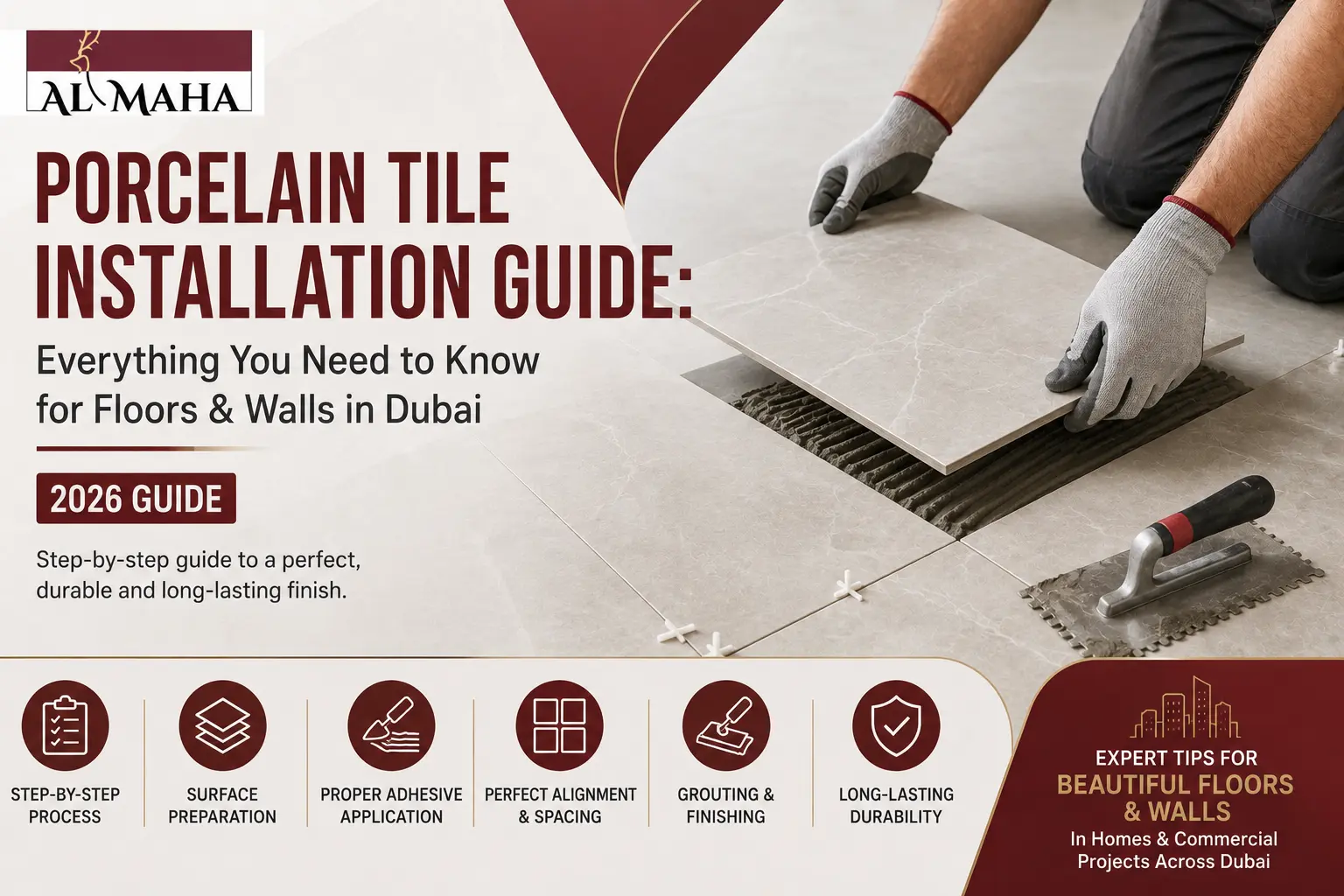
Our full porcelain tile installation guide for Dubai walks through this process end to end; the highlights specific to large format work are below.
Subfloor Preparation
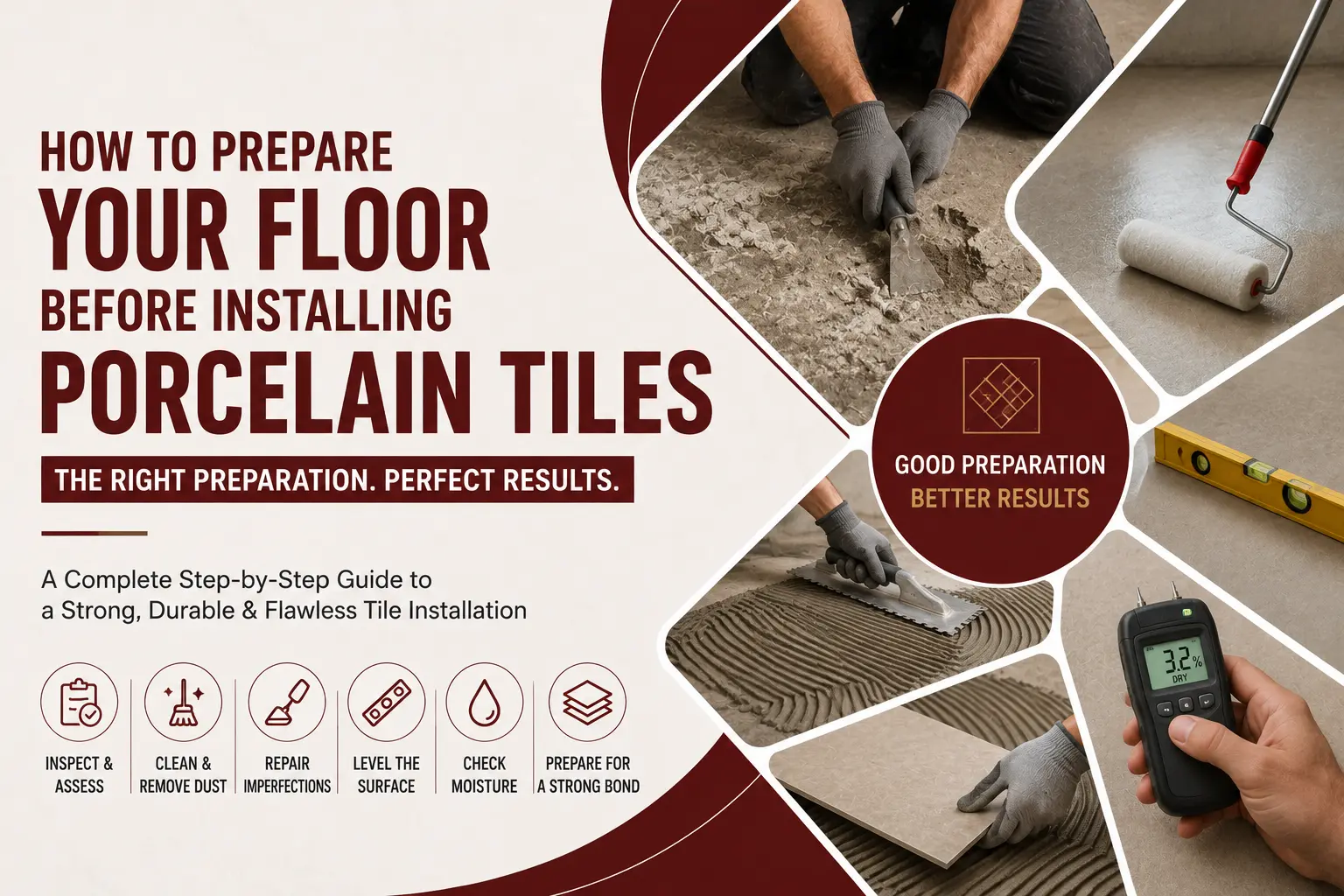
Large format tiles are unforgiving of an uneven substrate. The general tolerance benchmark is roughly 1/8 inch of variance per 10 feet — tighter than what's acceptable for smaller tile formats. Our guide on how to prepare a floor before installing porcelain tiles goes through this in more detail.
Self-leveling compounds are typically required before laying anything over 60x60cm, especially on older Dubai villa slabs that have settled or shifted slightly over the years.
Dry-laying the tiles first — arranging them in position without adhesive — lets you check pattern, cuts, and vein alignment (important for stone-look porcelain) before committing.
The 95%+ Mortar Coverage Rule
This is the single most misunderstood part of large format installation, and it's where budget installers cut corners.
Large slabs require back-buttering — applying mortar to the back of the tile in addition to the substrate — to eliminate air pockets underneath.
The industry benchmark is 95%+ mortar contact coverage. Anything less leaves voids that become breakage points under foot traffic or furniture load.
Achieving this consistently on 120x240cm and larger formats usually requires mechanical suction lifting frames to set the tile evenly without disturbing the mortar bed — not something a two-person crew can reliably do by hand.
Lippage Prevention
Lippage — where one tile edge sits slightly higher than its neighbor — is far more visible on large format tiles because the eye has more flat surface to compare against.
Tile leveling systems (clips and wedges) are standard practice now on any serious large format job.
Rectified edges (precisely cut, perfectly square tile edges) reduce the risk of lippage compared to non-rectified tiles, and most premium porcelain ranges sold in Dubai now come rectified as standard.
Cost & Sourcing Guide: What This Actually Costs in AED
Vague "large tiles cost more" statements aren't useful when you're budgeting a real renovation. Here's what actually drives the price. If you're still at the early planning stage, our floor tiles Dubai buying guide is a good companion resource for working out an overall budget.
Material Cost Differences
Italian and Spanish porcelain ranges typically sit at the premium end of the market, reflecting both design range and manufacturing quality control.
RAK Ceramics and other regional manufacturers offer strong mid-range options that have become increasingly popular for large format projects without the import premium.
Regional imports from other markets sit between these two tiers, and pricing per square meter varies enough that it's worth getting quotes from more than one porcelain tiles suppliers in Dubai before committing.
Always ask for pricing in AED per square meter specifically, and confirm whether the quote includes rectified edges, since non-rectified versions of the same design are sometimes priced lower.
Labor Cost Premium
Specialized handling for large format tiles typically commands a 30–50% labor premium over standard 60x60cm installation work.
This premium reflects the mechanical lifting equipment, additional crew needed to safely handle slabs, and the extra time back-buttering requires per tile.
Don't be surprised if a quote for large format installation comes in noticeably higher per square meter than a standard tiling job — that gap is legitimate, not padding, assuming the installer is doing the work correctly.
Adhesive and Ancillary Costs
Tile adhesive supplier Dubai pricing varies depending on whether you're specifying standard C2 adhesive or the S2 flexible adhesive required for outdoor and large format applications — S2 typically costs more per bag but isn't optional for exterior work.
Budget separately for interior tile glue around Dubai products if your project spans both indoor floors and outdoor terraces, since the two applications often call for different adhesive formulations.
A reliable tile glue supplier Dubai should be able to confirm which adhesive class matches your specific tile size, substrate, and location (indoor vs. outdoor) before you buy — this is not a place to guess.
Beyond Tiles: Complementary Materials Worth Sourcing Together
Most large format renovation projects in Dubai extend beyond flooring alone, and sourcing complementary materials from the same supplier network often simplifies logistics and color-matching.
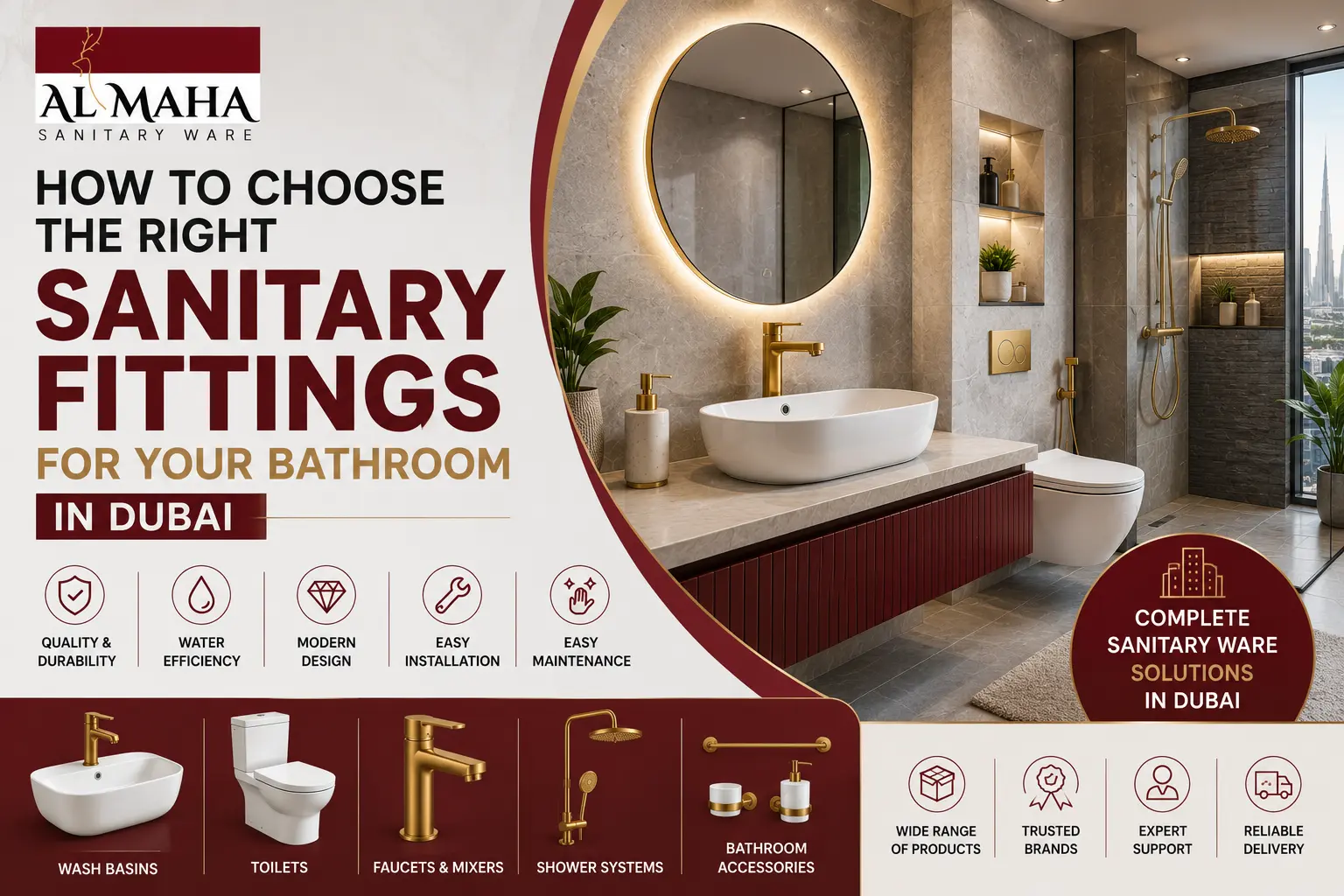
Sanitary ware in Dubai — matching bathroom fixtures to your tile palette is easier when sourced through suppliers who stock both, and working with established sanitary ware suppliers in Dubai can shorten your renovation timeline considerably. Our guides on sanitary fittings in Dubai and how to choose sanitary ware in Dubai cover this in more depth.
Cladding tiles for feature walls and exterior facades often use the same porcelain ranges as flooring, giving a cohesive look between interior and exterior surfaces.
Solid surface sheets are increasingly specified alongside porcelain for kitchen countertops and vanity tops where a seamless look is the goal.
Roofing sheets may factor into broader renovation scopes, particularly for villa projects extending beyond interior flooring.
Consolidating sourcing with a single sanitary suppliers Dubai partner who also handles marble, granite, and porcelain can reduce coordination headaches significantly on larger renovation projects.
Final Thoughts
Large format porcelain tiles are one of the smartest flooring upgrades a Dubai homeowner can make in 2026 — fewer grout lines, better durability than natural stone, and a design language that suits both villa and high-rise living. But the details matter more than most guides admit: S2 adhesive and expansion joints for anything outdoors, confirmed freight elevator clearances before you order, and a contractor who understands the 95%+ mortar coverage rule rather than skipping it to save time. Get those right, and your investment in premium porcelain will look as good in ten years as it does on installation day.
FAQs
What is considered a "large format" porcelain tile?
Generally anything from 60x120cm upward, with 120x240cm and 160x320cm slabs now common in Dubai villa and apartment renovations. Sizing affects everything from adhesive class to how the tiles get delivered — see our porcelain tile sizes guide for a full breakdown.
Can large format porcelain tiles be used outdoors in Dubai's climate?
Yes, but only with S2 class flexible adhesive and properly spaced expansion joints to handle thermal movement under summer heat. Skipping either is the most common cause of tenting and cracking on outdoor installs — our outdoor porcelain tiles Dubai guide covers what a compliant outdoor spec looks like.
Do large format tiles need special adhesive?
Yes. Standard C2 adhesive is fine for small indoor tiles, but large format work — especially outdoors — requires S2 class flexible adhesive rated for greater movement. Our porcelain tile adhesive guide for Dubai explains how to match adhesive class to tile size and location.
How much does large format tile installation cost compared to standard tiles?
Expect roughly a 30–50% labor premium over standard 60x60cm installation, driven by mechanical lifting equipment, extra crew, and back-buttering time. Material costs vary separately depending on whether you choose Italian/Spanish porcelain, RAK Ceramics, or another regional import.
Will large format tiles fit in my building's elevator?
Not always — this needs to be checked before ordering, not after. Freight elevator dimensions vary significantly between Dubai Marina and Downtown towers, and most Emaar- or Nakheel-managed buildings also require a delivery permit and sometimes a damage deposit. Confirm exact slab measurements against your building's cargo lift with the facilities team first.
What is the 95% mortar coverage rule?
It's the industry benchmark for how much of a tile's back surface must be in contact with mortar after installation. Large format tiles require back-buttering to hit this consistently, since gaps below 95% coverage become breakage points under foot traffic or furniture weight.
Are large format porcelain tiles safe around swimming pools?
Only if they're specified as anti-slip pool or coping tiles rather than standard flooring porcelain — a matte look alone doesn't guarantee a safe slip rating. See our swimming pool tiles range for pool-specific options engineered for wet, barefoot traffic.
How do I prevent lippage on large format tiles?
Use a tile leveling system (clips and wedges) during installation, choose rectified-edge tiles where possible, and make sure the subfloor is within tolerance before laying — roughly 1/8 inch of variance per 10 feet. Our guide on how to prepare a floor before installing porcelain tiles covers subfloor prep in detail.
 10 Sep, 2026