- By Admin
- Floor
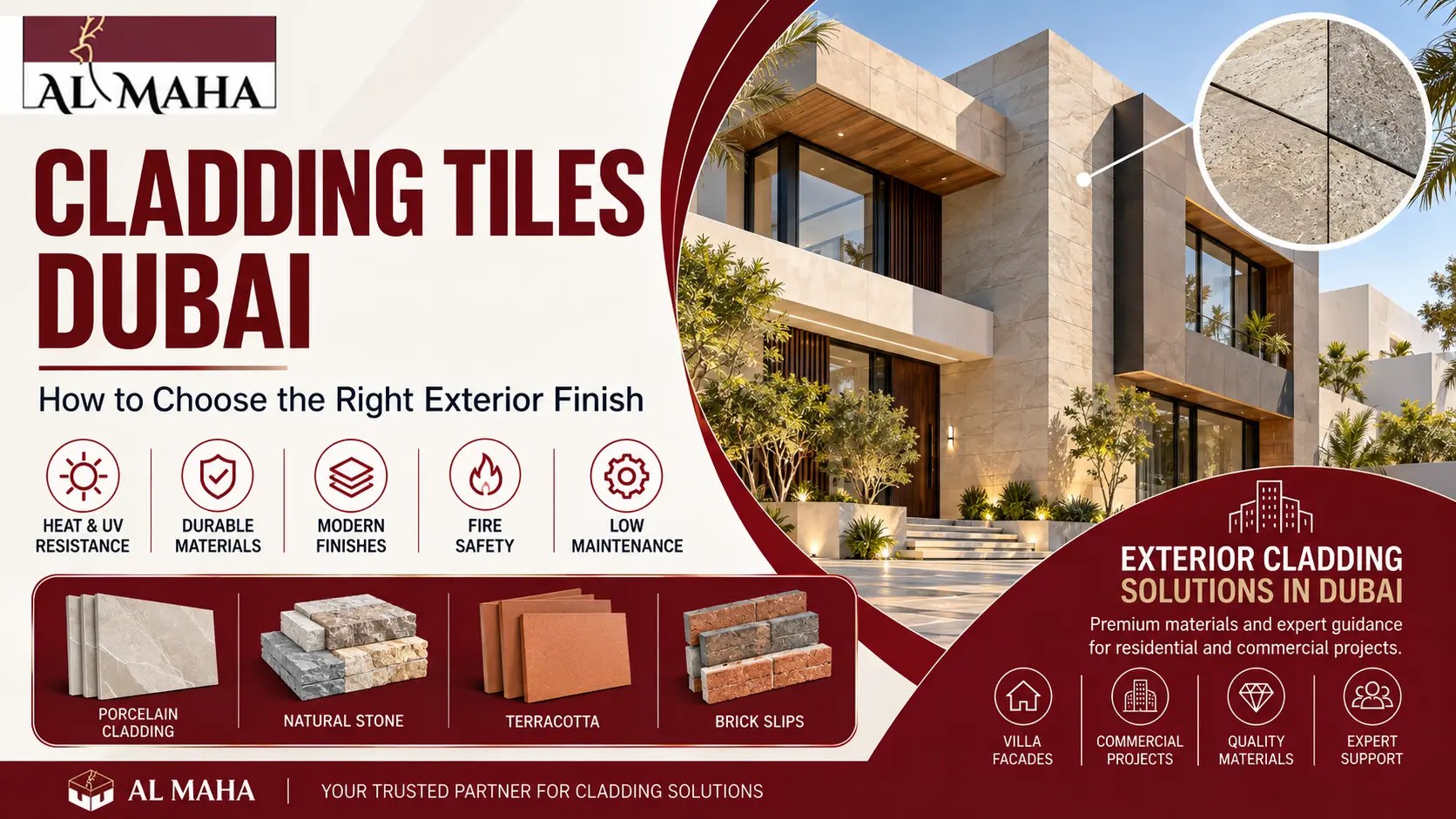
Cladding Tiles Dubai: Types, Benefits & How to Choose the Right Exterior Finish
Dubai is hard on buildings. Summer surfaces hit 50°C. Coastal air carries salt. Sandstorms scour paint off walls. Then a winter downpour tests every joint you laid.
A good exterior finish does more than look sharp. It protects the structure behind it. That is why cladding tiles have become the default choice for villas, towers, and commercial frontages across the UAE.
This guide covers the main material types, what each does well, and how to choose. It also covers the Dubai-specific rules most guides skip: fire ratings, fixing systems, and developer approvals.
Why Exterior Cladding Matters in Dubai
Cladding is the outer skin of your building. It sits over the structural wall and shields it from the weather.
In a climate like ours, that skin does four jobs:
Blocks heat. A ventilated cladding system keeps solar heat from reaching the wall behind it.
Resists UV. Quality tiles keep their colour. Paint fades.
Handles moisture. Humidity and rare heavy rain cannot soak into the masonry.
Fights abrasion. Wind-driven sand wears down soft finishes quickly.
Done right, outdoor cladding tiles can cut cooling loads and remove repainting from your maintenance budget. Done wrong, they crack, stain, or detach. The material matters, but the fixing method matters just as much.
Types of Exterior Cladding Tiles in UAE
Each material suits a different budget, building height, and look. Here is how they compare.
Porcelain and Large-Format Slabs
Porcelain is the most popular choice for tile cladding exterior work in Dubai, and for good reason.
Near-zero water absorption. Moisture cannot get in, so there is no frost or salt damage inside the body.
UV stable. Colours stay true for years.
Lighter than stone. Slabs from 9mm to 20mm put far less load on the structure.
Wide design range. You can get stone, concrete, wood, and metal looks.
For porcelain exterior wall cladding, thickness is a key spec. Thinner slabs (around 9mm) suit lightweight facades and renovations. Thicker 20mm slabs handle higher impact and can even be installed on raised supports.
Standard sizes run from 300x600mm up to 1200x1200mm and beyond. If you are weighing big formats, read our guide to large-format porcelain tiles in Dubai. You can also browse the full porcelain range.
Natural Stone
Natural stone wall cladding gives you a finish no manufactured tile fully matches. Granite, travertine, limestone, and basalt each have their own character.
Pros:
Unmatched depth and natural variation
Long service life
Premium look for high-end projects
Cons:
Heavy, which means stronger fixings and structural checks
Needs sealing, especially in coastal zones
Higher material and labour cost
Some stones stain or weather unevenly
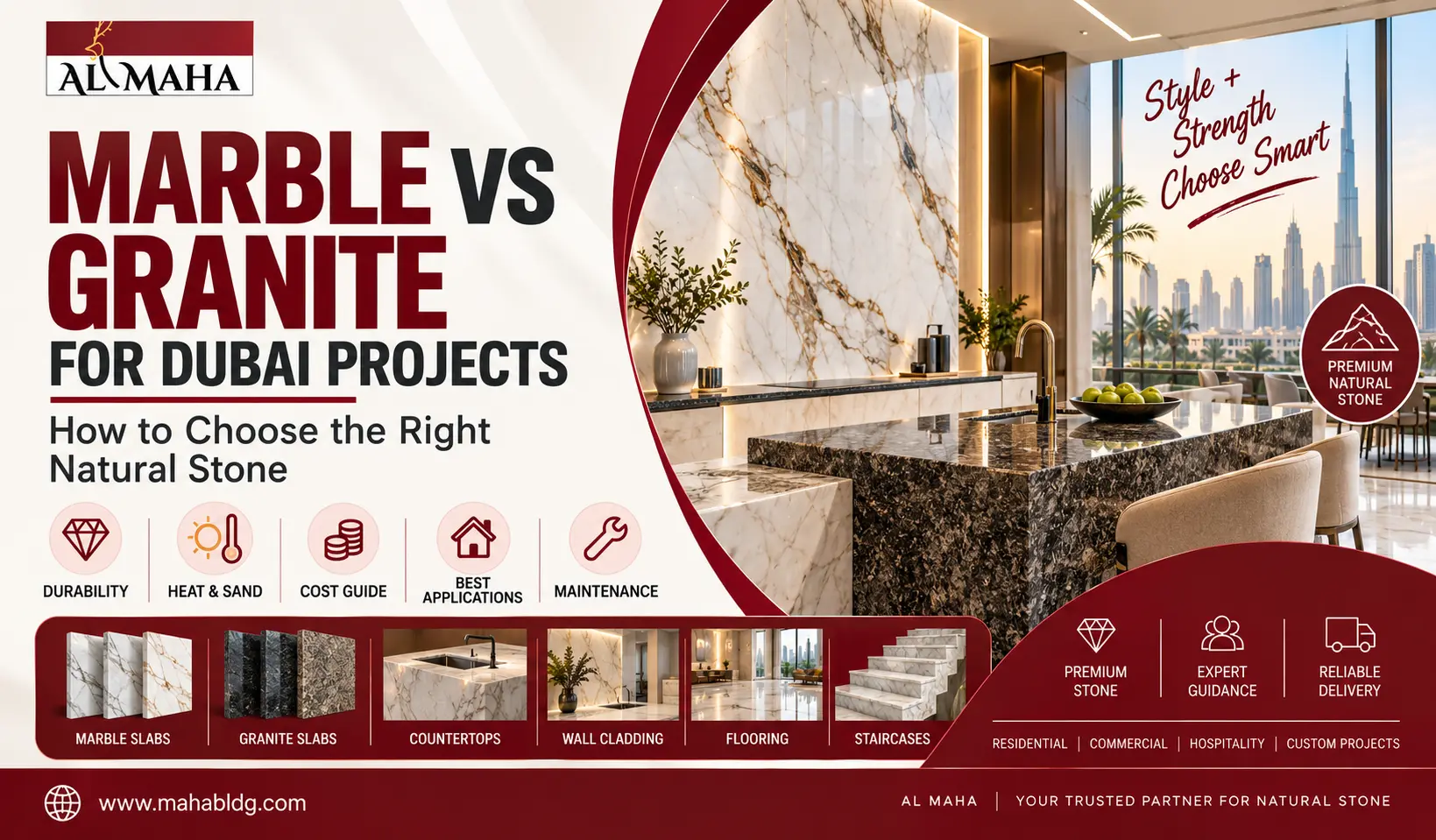
Granite is the toughest option. Travertine and limestone are softer and need more care. If you are deciding between two classics, our comparison of marble vs granite in Dubai breaks down the trade-offs, and you can see current options in our marble and granite range.
GRC and Terracotta
Glassfibre Reinforced Concrete (GRC) is moulded into almost any shape. Architects use it for geometric screens, deep reveals, and ornamental features. It is strong and relatively light.
Terracotta is a favourite for ventilated facades. The air gap behind each tile helps the wall breathe and reduces heat transfer. It also brings a warm, earthy tone that stands out among glass towers.
Brick Slips and Composite Tiles
Brick cladding tiles (often called brick slips) are thin cuts of real or manufactured brick. They deliver the industrial or rustic look without the weight of full brick.
They suit:
Contemporary villa feature walls
Boundary and garden walls
Cafés and retail frontages
Composite tiles offer similar looks at a lower price, though they usually have a shorter lifespan in intense sun. Always ask for UV test data before specifying composites for south- or west-facing walls.
Key Benefits of Tile Cladding in the UAE
Thermal Efficiency
A ventilated facade creates a cavity between the tile and the wall. Air moves through it and carries heat away. Less heat reaches your interior, so your AC works less in peak summer.
Colour That Lasts
Intense sun bleaches paint and cheap coatings. Fired porcelain and natural stone do not fade the same way. Your building looks the same in year ten as it did on handover.
Low Maintenance
Most cladding tiles need a periodic wash and little else. Compare that to repainting every few years. Over a building's life, cladding often costs less than it first appears.
Strength Against Sand and Wind
Hard-bodied tiles resist abrasion far better than render or paint. They also stand up to wind loads when fixed correctly.
Better Property Value
A well-clad facade lifts curb appeal. For developers and landlords, that means easier lettings and stronger resale prices.
Dubai-Specific Rules You Cannot Ignore While Installing Cladding Tiles
This is where many projects go wrong. Material choice is only half the picture.
Fire Safety
Dubai Civil Defence (DCD) sets strict requirements for facade materials, especially on high-rise buildings. Non-combustible systems and A1 or A2 fire ratings are central to compliance.
Porcelain, natural stone, and terracotta are inherently non-combustible, which is one reason they dominate tall-building work. Be more careful with composites and any backing or insulation layers. Always request the fire test certificates and confirm them against current DCD requirements before you order.
Heat, Salt, and Thermal Movement
Tiles expand in the afternoon and contract at night. That movement is constant. Without proper movement joints, it leads to cracks and hollow-sounding tiles.
For coastal projects near Dubai Marina, Palm Jumeirah, or the waterfront, salt air attacks metal fixings. Specify marine-grade 316 stainless steel anchors and brackets. Cheaper grades can corrode and stain the facade.
Developer and Municipality Approvals
Many communities have their own rules. Master developers such as Emaar and Nakheel, along with Dubai Municipality, can restrict colours, reflectivity, and facade changes. Get written approval before ordering. Reversing a rejected finish is expensive.
Wet-Fix vs Dry-Fix: Choosing the Installation Method
Two methods dominate. Picking the right one is as important as picking the tile.
Wet-Fix (Adhesive)
The tile is bonded to the wall with cement-based adhesive.
Best for:
Low-rise villas
Smaller tiles
Lower wall heights
Watch for:
Substrate must be clean, flat, and sound
Needs a quality exterior-grade adhesive
Large or heavy tiles are risky this way
Adhesive choice makes or breaks wet-fixed work. Our porcelain tile adhesive guide for Dubai explains what to look for, and our grout guide covers the joints.
Dry-Fix (Mechanical Subframe)
Tiles hang on an aluminium or steel frame. Clips or anchors hold them, and there is an air gap behind.
Best for:
High-rise buildings
Heavy stone and large slabs
Ventilated facade systems
Benefits:
Better thermal performance
Tiles can be replaced individually
Handles building movement more easily
Less reliance on adhesive over time
Dry-fix costs more upfront. On tall or heavy projects, it is usually the safer and more compliant route.
Not sure which suits your wall? Our cladding tiles fixing page explains the options.
How to Choose the Right Cladding Tile Manufacturer in Dubai Environment
Work through these questions in order.
What is the building height? Tall buildings usually call for dry-fix and certified non-combustible materials.
Where is it? Coastal sites need corrosion-resistant fixings and low-absorption tiles.
What is the budget? Count tile cost, fixings, subframe, and labour. Fixing can match or exceed material cost.
What look do you want? Match the finish to the architecture and any developer guidelines.
How much maintenance can you manage? Porcelain needs the least. Natural stone needs sealing.
Who is installing? Experienced facade installers matter more than most people expect.
A quick rule of thumb:
Villa on a budget: porcelain with wet-fix or light dry-fix
Premium villa: natural stone or large-format porcelain, dry-fix
High-rise or commercial: porcelain, GRC, or terracotta on a certified ventilated system
Feature wall: brick slips or textured porcelain
If you are building your wider material list, our building materials guide for Dubai is a useful starting point. And if you are comparing suppliers, read how to choose the best tile supplier in Dubai.
Outdoor Cladding Beyond the Facade
The same logic works at ground level. Entrance walls, garden features, pool surrounds, and terraces all take a beating from sun and water.
For those areas, check these guides:
Slip rating matters here. A finish that looks great dry can be dangerous wet. Our tile finish guide explains matt, polished, and textured surfaces.
Interior Cladding: Walls and Ceilings
Cladding is not only for exteriors. Inside, the same ideas apply in softer form.
Wall cladding tiles work well in lobbies, feature walls, and commercial interiors. They add texture and protect the surface behind.
In wet rooms, tile effect bathroom wall panels give a quick, low-mess alternative to full tiling. They suit rentals and fast refurbishments. For a lasting finish in a premium bathroom, real tile still wins.
In the kitchen, cladding for kitchen walls has to handle heat, grease, and frequent wiping. Porcelain is ideal. It will not stain, scorch, or absorb splashes. Kitchen cladding behind a hob or sink is where a hard-wearing surface pays back the most.
For sound control, acoustic foam panels for walls are common in studios, offices, home cinemas, and restaurants. They manage echo rather than protect the surface, so most people pair them with a durable tile or stone finish elsewhere.
Overhead, white plastic ceiling panels are lightweight, moisture-resistant, and quick to install. They suit bathrooms, kitchens, and service areas. Ceiling wall panels more broadly help you carry one look from floor to ceiling in a single room.
Match the product to the room. Hard tile for heat and moisture. Panels where speed or sound control matters.
Maintenance and Longevity Checklist
Cladding lasts if you look after it. Keep this routine:
After sandstorms: rinse dust and grit off the facade
Quarterly: inspect for loose, cracked, or hollow-sounding tiles
Twice a year: check silicone and movement joints, and replace any that have split
Annually: inspect fixings, especially near the coast
Natural stone: reseal as the manufacturer advises
Cleaning: use low-pressure water and mild cleaner. Skip harsh acids
Small repairs are cheap. Water behind a failed joint is not.
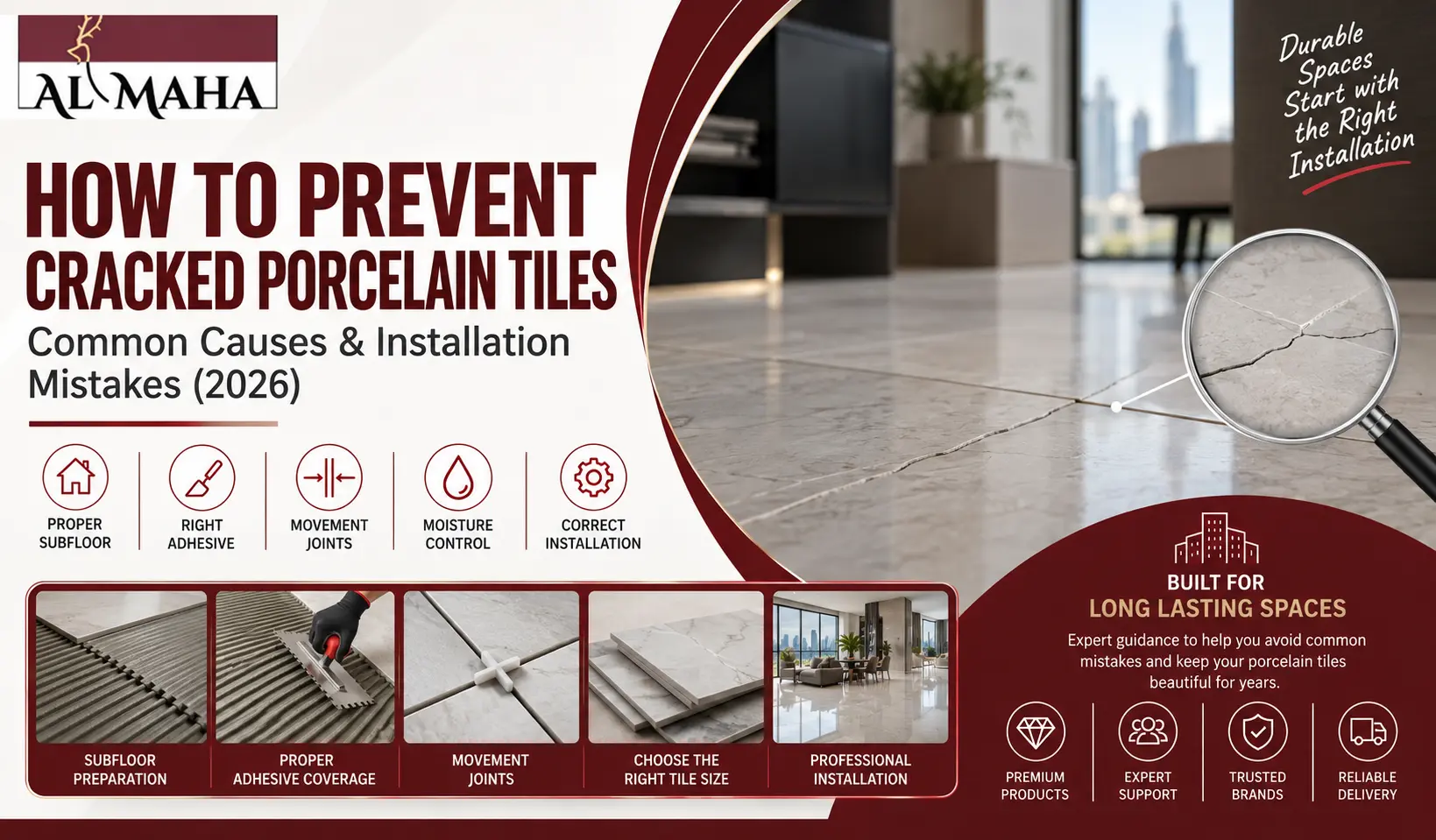
If you want to avoid problems from day one, read our guide on how to prevent cracked porcelain tiles.
Common Mistakes to Avoid
Ordering before getting developer approval
Choosing on price without checking fire certificates
Using standard fixings in coastal zones
Skipping movement joints
Using a weak adhesive on a large or heavy tile
Ignoring substrate prep
Most cladding failures trace back to one of these, not to the tile itself.
Final Thoughts
The right cladding tile does three things. It looks good, it protects the building, and it lasts. In Dubai that means a material rated for heat, salt, sand, and fire safety, installed with a method that suits your wall.
Start with the building height and location. Confirm fire ratings. Get approvals in writing. Then pick the finish.
Ready to talk specifics? Contact the Maha Building Materials team or browse all product categories.
 05 Oct, 2026