- By Admin
- Floor
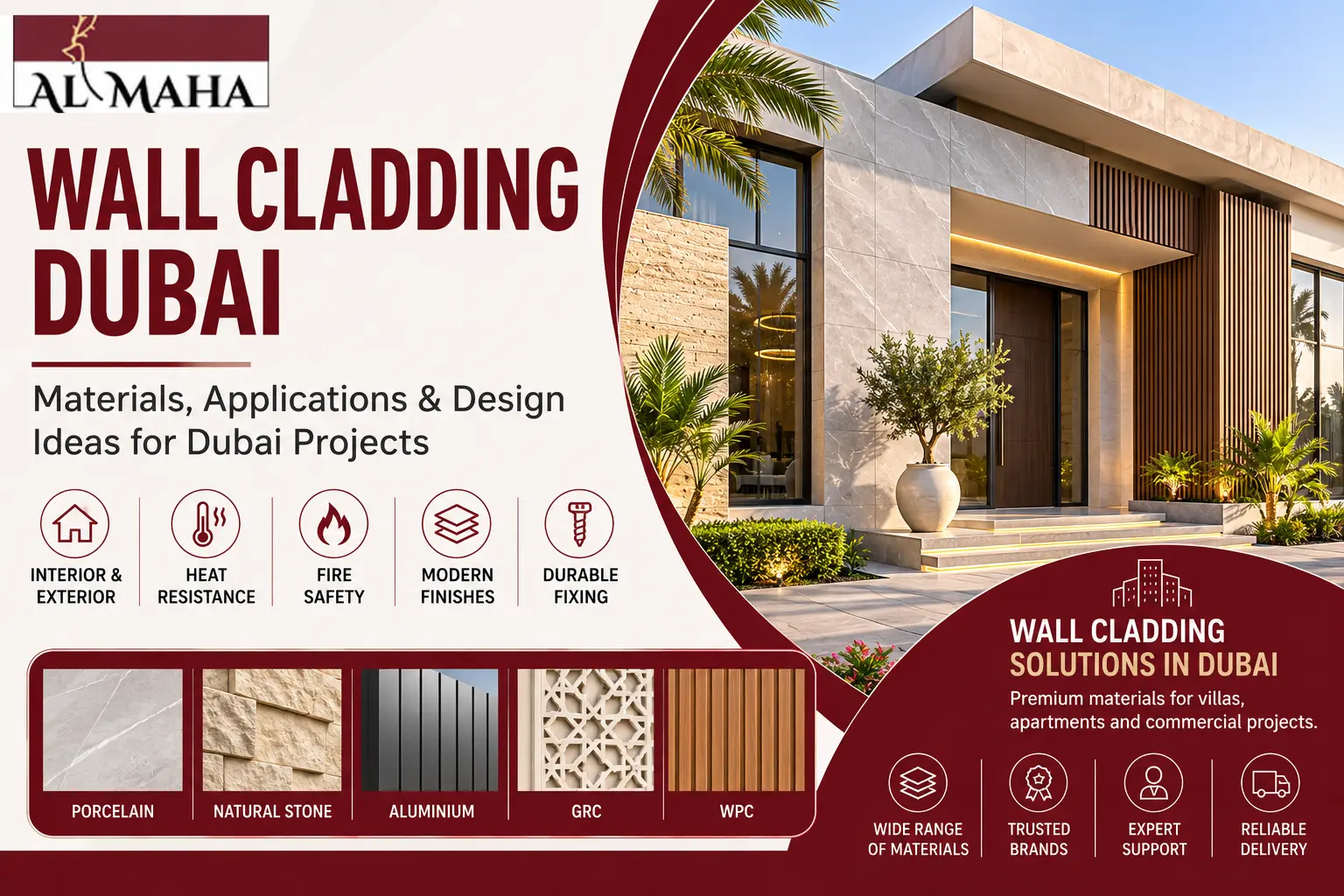
Wall Cladding Dubai: Materials, Applications & Design Ideas for Dubai Projects
Wall cladding looks simple on a mood board. On a Dubai site, it gets tested by 50°C sun, fine desert dust, high humidity near the coast, and some of the strictest fire rules in the region.
Pick the right material and your wall looks sharp for a decade. Pick the wrong one and you get warped panels, faded colour, or a failed inspection.
This guide covers what actually matters for wall cladding in Dubai: how interior and exterior jobs differ, which materials work where, design ideas for villas, apartments and commercial spaces, the rules you need to know, real cost drivers, and how to install and maintain cladding in this climate.
Interior vs. Exterior Wall Cladding in Dubai: Key Differences
The same panel can be perfect indoors and a disaster outside. Treat them as two separate categories.
Interior cladding
Inside, you are solving for looks, sound, and moisture control. Typical jobs include:
TV feature walls and sofa backdrops
Majlis and dining room detailing
Upholstered headboard walls
Acoustic panels in offices
Splashback and powder room walls
The air-conditioned environment is forgiving. Temperature stays stable, UV is limited, and panels can be lighter and thinner.
Exterior cladding
Outside, the wall is a weather barrier. It faces:
Heat: surfaces on west and south elevations get very hot in summer.
UV: sunlight breaks down plastics and fades pigments.
Sand and dust: fine grit abrades soft finishes and settles in grooves.
Humidity and salt air: a real issue near the coast and creeks.
Wind load: tall buildings need properly engineered fixings.
The short version: interior cladding is a design decision. Exterior cladding is an engineering decision that also has to look good.
For a wider view of what goes into a build, see our guide to building materials in Dubai.
Best Wall Cladding Materials for Dubai Projects
Here is how the main options perform, grouped by where you would use them.
Interior feature walls
MDF with lacquer or veneer. The go-to for fluted and slatted designs. It cuts cleanly, paints well, and suits bespoke joinery. Keep it away from wet areas. Lifespan: 10 to 15 years indoors.
Solid wood and timber veneer. Warm and premium. It needs stable humidity and a quality finish. Best for majlis walls and executive offices.
PU and gypsum mouldings. Lightweight and easy to shape into classic wall frames. Polyurethane handles moisture better than gypsum.
Acoustic fabric panels. Useful in offices, home cinemas, and meeting rooms where echo is a problem.
Mirror, leather and fabric. Strong for accent walls and headboards. Use sparingly. They show wear quickly in high-traffic areas.
Wet zones: bathrooms, kitchens and powder rooms
Porcelain tile and slabs. Non-porous, easy to clean, and stable in humidity. This is the safest choice for wet walls. Our porcelain range covers a wide set of finishes, and our tile finish guide helps you choose between matte, polished and textured surfaces.
PVC panels. Budget-friendly and water-resistant. Fine for light-duty areas, but the look is less refined and they are not suited to exterior use.
Solid surface sheets. Seamless, repairable and clean-looking. They suit vanity walls and shower surrounds. Read more in our solid surface sheets guide.
Exterior facades
Cladding tiles and porcelain. Durable, colourfast and low maintenance. Large-format porcelain gives a clean, modern facade with few joints. See cladding tiles in Dubai: types and benefits and our large-format porcelain guide.
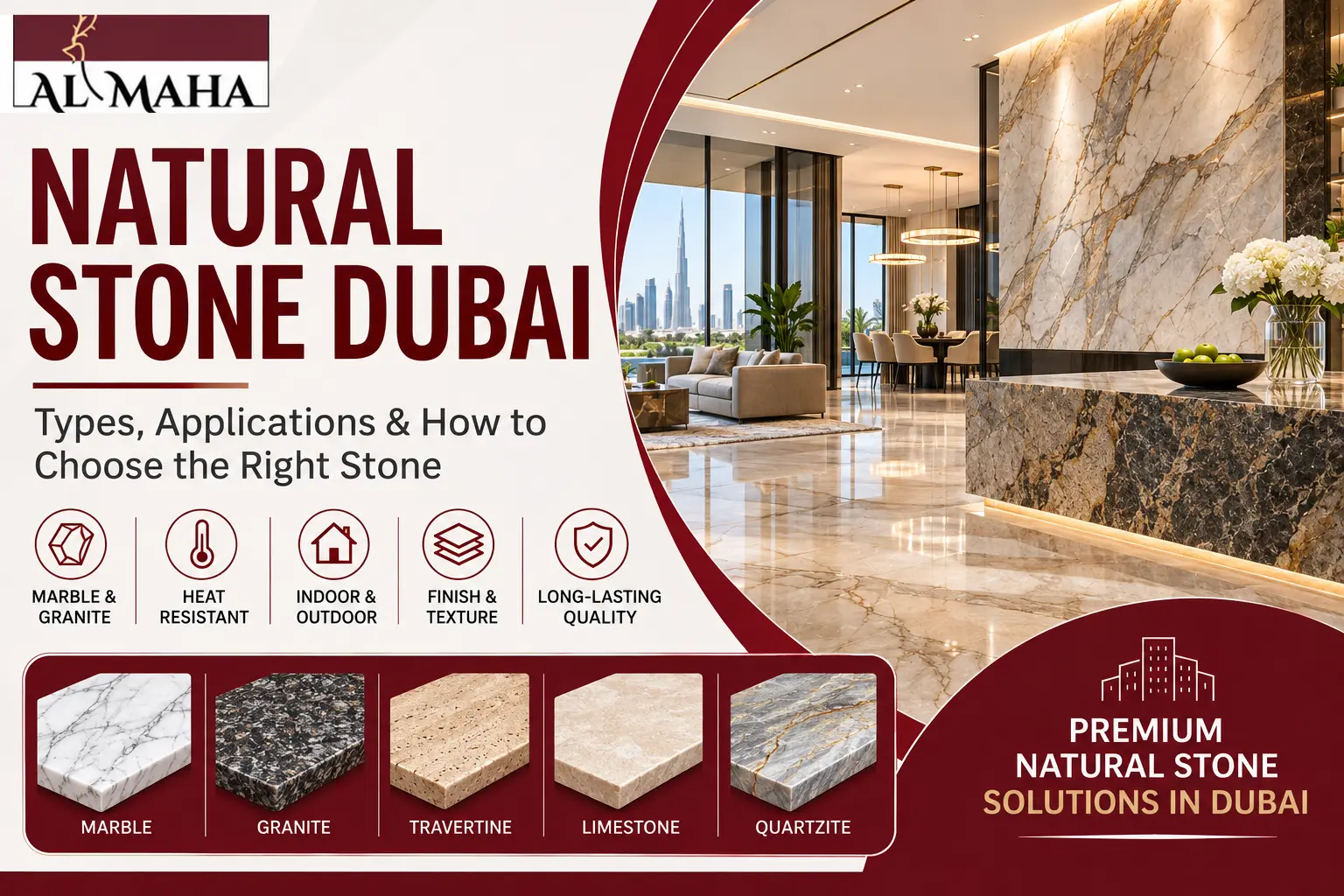
Natural stone (travertine, limestone, granite). A classic for villa entrances and hotel frontages. Each slab is unique, and it ages well when sealed. Our guide to natural stone in Dubai explains the options, and the marble and granite range shows what is available.
ASA-capped WPC. A composite with a protective outer layer that resists UV. It gives a timber look without the upkeep. Standard uncapped WPC and PVC can fade quickly in direct Dubai sun, sometimes within a year or two.
PVDF-coated aluminium. Light, strong, and non-combustible. A strong pick for louvres, screens and rainscreen systems on south and west elevations.
GRC and fibre cement. Good for sculpted elements, arches and Arabic-style detailing with fire performance in mind.
Quick rule of thumb
Indoors and dry: MDF, veneer, PU, fabric.
Indoors and wet: porcelain, solid surface.
Outdoors: porcelain, natural stone, aluminium, ASA-capped WPC, GRC.
Top Applications & Design Ideas for Villas, Apartments & Commercial Spaces
Good cladding follows the room. Here is what works.
Villas
Majlis walls: wide, balanced panel layouts with subtle lighting. Symmetry matters here.
Entrance facades: stone or porcelain cladding on the portico gives presence without overpowering the elevation.
Outdoor feature walls: vertical-profile cladding near pools and terraces. Pair with outdoor porcelain tiles for the floor to keep the look consistent.
Pool areas: see our guide to swimming pool tiles in Dubai for wall and waterline finishes.
Apartments
TV wall: frame the screen with a slim panel border or fluted section. Run cable and power inside the wall before you finish it.
Headboard wall: upholstered or slatted panels add depth without taking floor space.
Hallways: continuous rails or vertical slats make a narrow corridor feel taller.
Hidden doors: flush panels with concealed hinges keep the wall line clean.
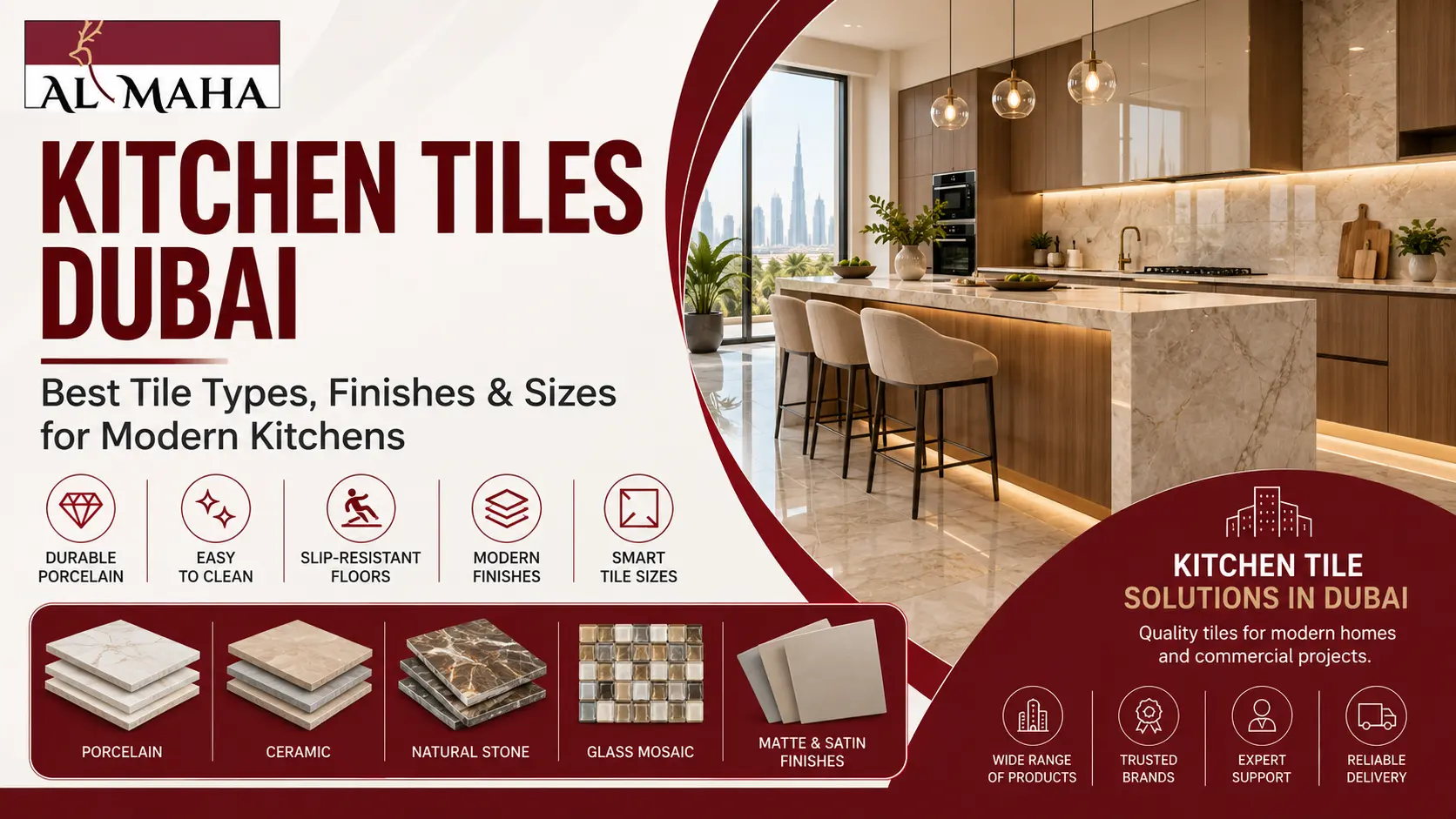
Kitchens: porcelain splashbacks handle heat and splatter. Browse our kitchen tiles guide for finishes and sizes.
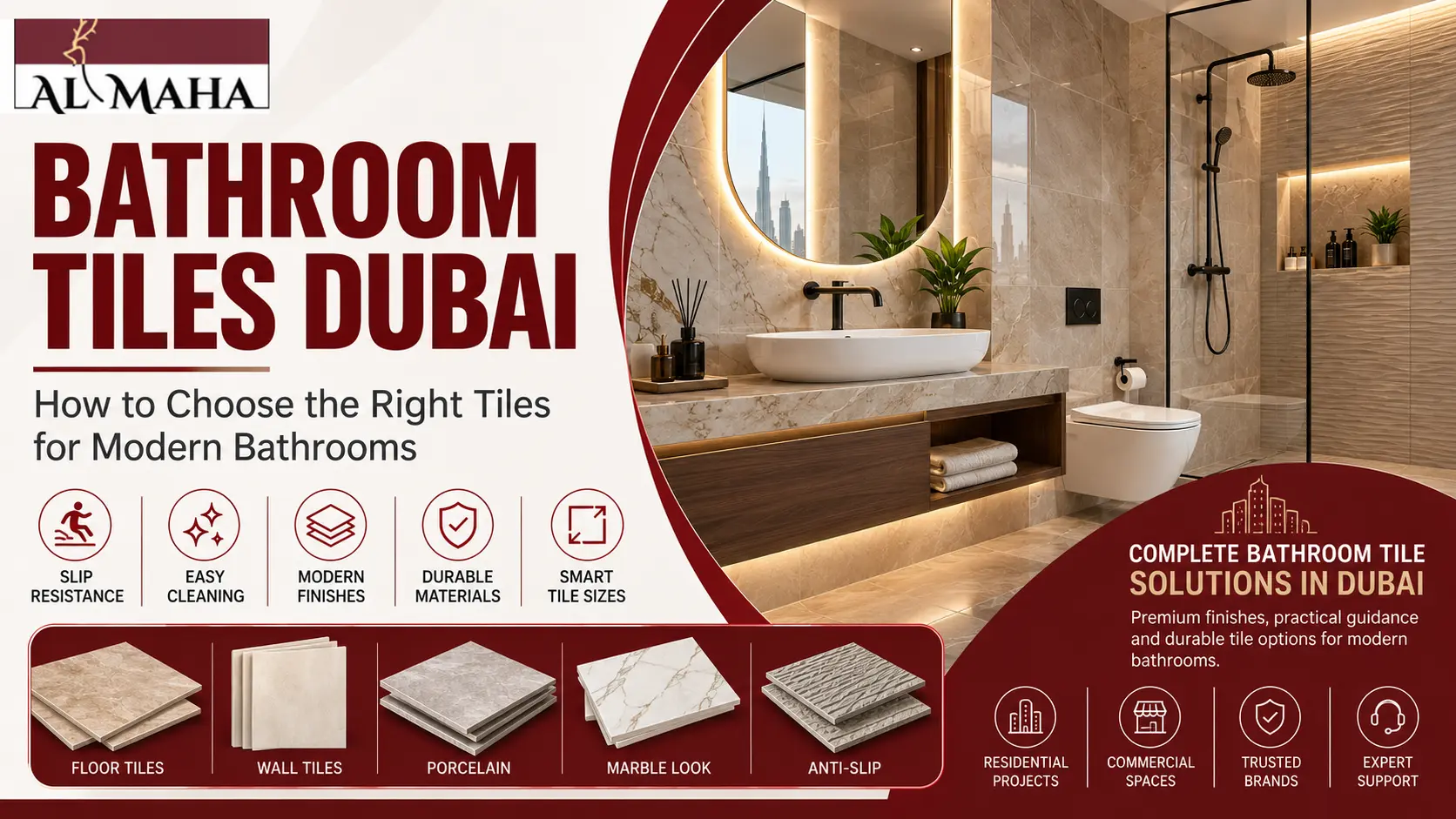
Bathrooms: large-format slabs reduce grout lines. Get ideas in our piece on luxury bathroom tiles.
Commercial spaces
Hotel lobbies: stone-look porcelain or natural stone for a high-end first impression.
Offices: acoustic wall panels and a branded feature wall for reception and video-call backdrops.
Retail and F&B: textured panels and mixed materials, such as timber with brushed metal, to set a mood.
Design tips that save regrets
Test colour samples on the wall in morning and evening light.
Avoid heavy battening in small rooms. It eats space.
Skip deep horizontal grooves outdoors. Dust collects in them.
Plan LED strips and drivers before panels are cut.
Keep the palette to two or three materials per space.
Dubai Regulations: Fire Ratings (DCD) & Community NOC Guidelines
This is the part many guides skip. It is also the part that can stop a project.
Fire safety and Dubai Civil Defence
Dubai follows the UAE Fire and Life Safety Code, and Dubai Civil Defence (DCD) enforces it. The rules are strictest for high-rises, hotels, hospitals and public buildings.
The core idea is simple. Cladding that burns easily is a problem on facades and escape routes. Materials fall roughly into two groups:
Non-combustible or limited-combustibility: natural stone, porcelain, fibre cement, GRC, solid aluminium, and mineral-filled ACP with a fire-retardant core.
Combustible: standard PVC, uncertified WPC, and PU foam products.
If your project is commercial, or a high-rise, confirm the required fire rating with your consultant before you order. Ask suppliers for test reports and certificates, not just a brochure claim.
Community rules and NOC approvals
Villa owners in master-planned communities cannot change the facade freely. Developers such as Emaar, Nakheel and Damac set design guidelines, and Dubai Municipality rules apply on top.
Before you change an exterior wall, run through this checklist:
Check the community design guidelines for approved colours and materials.
Confirm whether changes to the elevation need a No Objection Certificate (NOC) from the master developer.
Submit drawings and material samples if required.
Do not alter the external volume or projections without approval.
Get approval in writing before work starts.
Rules differ by community and change over time. Always verify the current requirements with the developer or your consultant.
Wall Cladding Cost in Dubai: Material + Installation Breakdown (AED)
Online price lists often mix material-only prices with installed prices. That is why the numbers look contradictory. Always ask what a quote includes.
Cost has three parts:
Material (per square metre)
Sub-frame and fixings (especially for heavy or exterior systems)
Labour and finishing
Here is an indicative guide. Treat the figures as ballpark ranges for planning. Final pricing depends on brand, thickness, finish, site access and project size.
Material | Indicative material cost (AED/sqm) | Install and sub-frame | Expected lifespan | Best for |
PVC panels | 70 – 180 | Low | 5 – 10 years | Dry interior walls |
MDF (lacquer/veneer) | 90 – 220 | Low to medium | 10 – 15 years | Feature walls, joinery |
WPC (interior) | 120 – 280 | Low to medium | 10 – 15 years | Interior slats |
Natural timber | 180 – 450 | Medium | 15+ years | Premium interiors |
ASA-capped WPC | Quote-based | Medium | 10 – 15 years | Exterior timber look |
Porcelain slabs and tiles | Quote-based | Medium to high | 20+ years | Interior, wet zones, facades |
Natural stone | Quote-based | High | 25+ years | Entrances, lobbies, facades |
Aluminium louvres/screens | Quote-based | High | 20+ years | Exterior screens, rainscreen |
The first four material ranges reflect typical Dubai market pricing seen in competitor guides. Prices for the other materials vary widely, so we recommend a site-specific quote.
Where costs creep up
Uneven walls that need levelling first
Aluminium or steel sub-frames for heavy cladding
Scaffolding or access equipment on tall elevations
Cutting and wastage on complex patterns
Fire-rated certification and testing
Not sure what to budget? Compare options at the categories page or contact our team for a quote.
Installation & Maintenance Checklist for Dubai's Heat and Dust
Great material fails with poor installation. Use this checklist.
Before installation
Check wall condition. Fix damp, cracks and loose plaster first.
Confirm load limits. Thin partitions cannot carry heavy stone or porcelain.
Coordinate MEP early: sockets, AC thermostats, LED drivers, and access hatches.
Order 5 to 10 percent extra for cuts and breakage.
Choosing the fixing method
Adhesive or silicone: only for lightweight interior panels on level plaster or gypsum.
Aluminium or galvanised steel sub-frame: needed for heavy porcelain, natural stone, and ventilated exterior rainscreen systems.
Mechanical fixings: required on exterior walls where wind load and thermal movement matter.
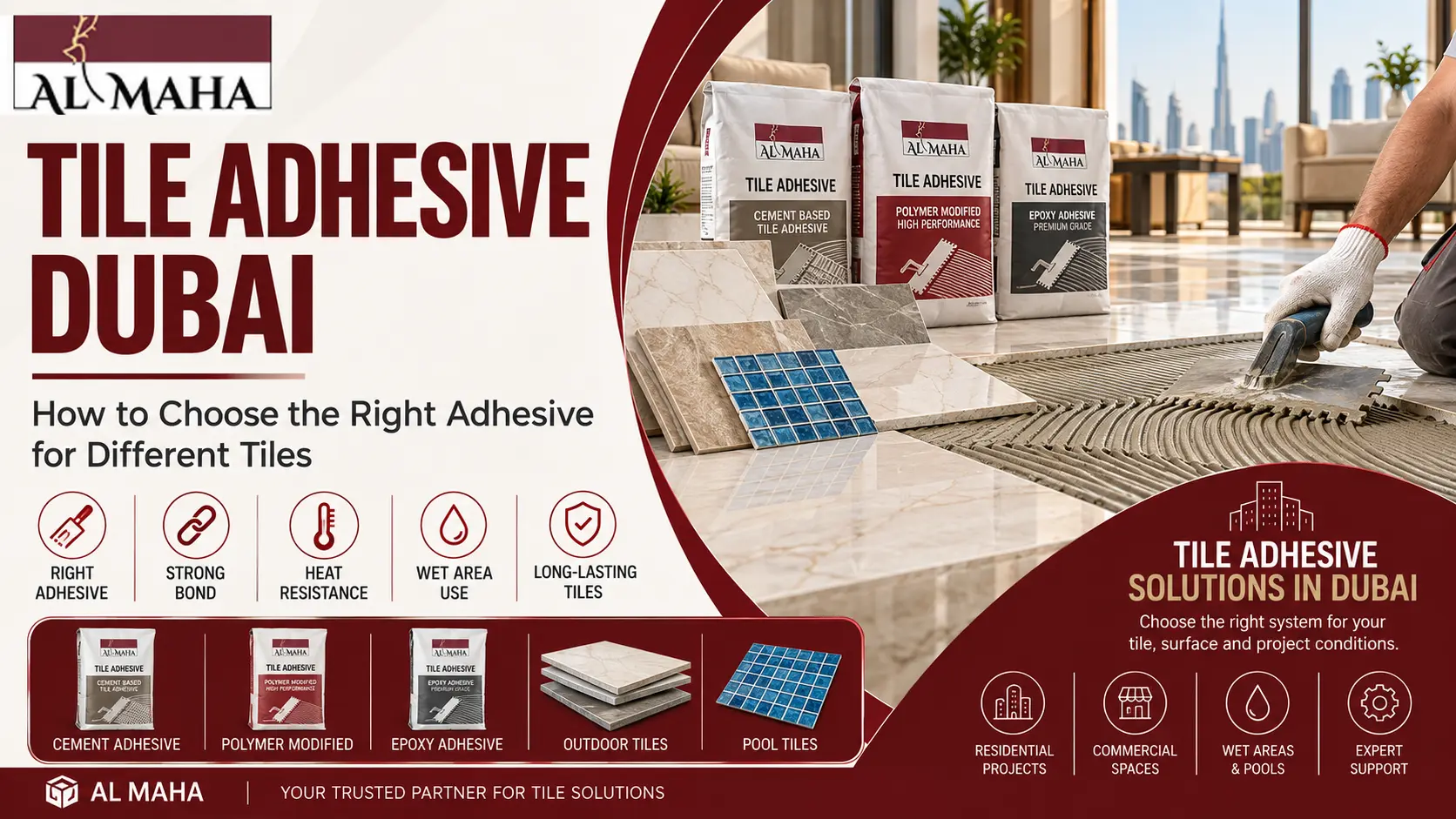
If you are fixing tiles, the adhesive matters as much as the cladding. Our guides on tile adhesive and porcelain tile adhesive explain how to match product to surface. You can also browse cladding tile fixing products and interior tile glue. To avoid failures later, read how to prevent cracked porcelain tiles.
Allow for heat movement
PVC and WPC expand in the summer sun. Leave expansion gaps, use proper sub-framing, and never fix panels tight edge to edge. Without gaps, panels buckle.
Maintenance
Rinse exterior cladding with low-pressure water. Avoid harsh pressure on soft finishes.
Use mild, non-abrasive cleaners.
Re-seal natural stone as advised by the supplier.
Inspect joints and sealants once a year.
Keep vents and access panels clear.
Smooth, sealed or vertical profiles clean faster than deep horizontal grooves.
Choosing the Right Partner in Dubai
The supplier you choose shapes the result as much as the material. Look for clear technical data, certificates, stock availability, and honest advice on what suits your site. Our guide on how to choose the best tile supplier in Dubai covers what to ask. You can also learn more about us.
Final Thoughts
Wall cladding in Dubai rewards planning. Match the material to the environment, confirm fire and community requirements early, and budget for the sub-frame and installation, not just the panels.
Start with the basics: where is the wall, what does it face, and what must it survive? The answers narrow the field quickly.
Ready to choose? Explore our full product range or get in touch and our team will help you shortlist materials for your project.
 10 Nov, 2026